Bigfin squid
Template:Short description Template:Use dmy dates Template:Distinguish Template:Automatic taxobox
Bigfin squids are a group of rarely seen cephalopods with a distinctive morphology. They are placed in the genus Magnapinna and family Magnapinnidae.<ref name="EoL">Template:Cite EoL</ref> Although the family was described only from larval, paralarval, and juvenile specimens, numerous video observations of much larger squid with similar morphology are assumed to be adult specimens of the same family.<ref name="tolweb">{{#invoke:citation/CS1|citation |CitationClass=web }}</ref>
The arms and tentacles of the squid are both extremely long, estimated at Template:Convert. These appendages are held perpendicular to the body, creating "elbows". How the squid feeds is yet to be discovered.<ref name="Osterhage2020">Template:Cite journal</ref>
Magnapinna is thought to be the deepest-occurring squid genus, with sightings as deep as Template:Convert below the surface, making it the only squid known to inhabit the hadal zone.<ref name="jamieson-2022">Template:Cite journal</ref><ref name="spektor-2022">{{#invoke:citation/CS1|citation |CitationClass=web }}</ref>
Taxonomy
Magnapinna is the sister group to Joubiniteuthis, another little-known deep-sea squid with an unusual body plan and long arms. Both Magnapinna and Joubiniteuthis are monotypic genera within their own families, Magnapinnidae and Joubiniteuthidae respectively. They are also closely related to the "whip-lash squid" in the families Chiroteuthidae and Mastigoteuthidae.<ref name="fernandez-alvarez-2022">Template:Cite journal</ref>
Physical specimens
The first record of this family comes from a specimen (Magnapinna talismani) caught off the Azores on 10 August 1883.<ref name="fischer-joubin-1906">Template:Cite book</ref> Due to the damaged nature of the find, little information could be discerned, and it was classified as a mastigoteuthid, first as Chiroteuthopsis talismani<ref name="fischer-joubin-1906" /> and later as Mastigoteuthis talismani. In 1956, a similar squid (Magnapinna sp. C) was caught in the South Atlantic, but little was thought of it at the time. The specimen was illustrated in Alister Hardy's The Open Sea (1956), where it was identified as Octopodoteuthis sicula.<ref>Template:Cite book</ref>

During the 1980s, two additional immature specimens were found in the Atlantic (Magnapinna sp. A), and three more were found in the Pacific (Magnapinna pacifica). Researchers Michael Vecchione and Richard Young were the chief investigators of the finds, and eventually linked them to the two previous specimens, erecting the family Magnapinnidae in 1998, with Magnapinna pacifica as the type species.<ref name="VecchioneYoung1998" /> Of particular interest was the very large fin size, up to 90% of the mantle length, that was responsible for the animals' common name.
A single specimen of a fifth species, Magnapinna sp. B, was collected in 2006. Magnapinna sp. A was described as Magnapinna atlantica in 2006.<ref name="VecchioneYoung2006" />
The genus was described from two juveniles and paralarva, none of which had developed the characteristic long arm tips. However, they did all have large fins, and were therefore named "magna pinna", meaning "big fin".<ref name="hanlon-2018">Template:Cite book</ref>
Sightings
The presumed adult stage of Magnapinna is known only from video observations from submersibles, deep sea oil rig cameras, and remotely-operated vehicles (ROVs); no physical specimens have yet been collected, leaving their exact identity unknown. These individuals and the collected juvenile specimens share the large fins and the vermiform arm tips with no suckers, but the iconic elongated arm tips are known only from observed individuals. Although it has not been directly confirmed whether these squid are the same as the Magnapinna known from specimens, it is largely accepted that they are members of Magnapinnidae.<ref name="tolweb" /><ref>Template:Cite journal</ref>
Although observations had been made over a decade earlier, adult bigfin squid only became known to science in 2001, when marine biology student Heather Holston sent footage of what she described as a "21-foot-long squid" to teuthologist Michael Vecchione. The footage had been recorded from an ROV in the Gulf of Mexico in January 2000 at the request of Holston's boyfriend Eric Leveton, who planned on showing it to her. Leveton was a structural engineer aboard the oil-drilling ship Millennium Explorer, who had happened to look into the ROV operation shack when the squid was observed by operators. Although Vecchione initially surmised from Holston's description that the footage might be the first video of a live giant squid (Architeuthis dux), he realized that the video itself portrayed a completely different squid that had no known identity.<ref>{{#invoke:citation/CS1|citation |CitationClass=web }}</ref><ref name=":3">{{#invoke:citation/CS1|citation |CitationClass=web }}</ref><ref>Template:Cite news</ref><ref>{{#invoke:citation/CS1|citation |CitationClass=web }}</ref> Template:Block quote Further discussions with other cephalopod researchers found no leads on the identity of the squid, and it was thus dubbed the "mystery squid" for a portion of time. Analysis by Vecchione et al of previous footage from submersibles found other video records of bigfin squid, the earliest from 1988. Around the same time, new high-quality footage of a bigfin squid was also recorded off Hawaii by the ROV Tiburon. In December 2001, Vecchione et al published a paper collating these observations; this was also the first paper to identify them as potential members of the Magnapinnidae, which had been named by Vecchione from the juvenile specimens a few years earlier.<ref name=":4">Template:Cite journal</ref><ref name=":3" /><ref>Template:Cite news</ref> Independent of Vecchione's publication, Guerra et al published a paper the following year analyzing some of the early bigfin squid footage, and also identified them as potential adult magnapinnids.<ref name="Guerra" />
Anatomy
The specimens in the videos looked very distinct from all previously known squids. Uniquely among cephalopods, the arms and tentacles were of the same length and looked identical (similar to extinct belemnites). The appendages were also held perpendicular to the body, creating the appearance of strange "elbows". Most remarkable was the length of the elastic tentacles, which has been estimated at up to 15–20 times the mantle length. This trait is caused by filament coiling of the tentacles, a trait that is rare among similar species.<ref name="Osterhage2020" /> Estimates based on video evidence put the total length of the largest specimens at Template:Cvt or more, with some estimates up to Template:Cvt.<ref>Template:Cite magazine</ref> Viewing close-ups of the body and head, it is apparent that the fins are extremely large, being proportionately nearly as big as those of bigfin squid larvae. While they do appear similar to the larvae, no specimens or samples of the adults have been taken. While their exact identity is unknown, all of the discovered specimens can be observed to have a beige color body, translucent fins, near-white tentacles, and dark eyes.<ref name="Osterhage2020" /> These species of squids are mainly identifiable by their long thin arms and specific colors. The squid also have a unique brachial crown that sets them aside from other known families.<ref name="VecchioneYoung1998" />
Feeding behaviour
Little is known about the feeding-behaviour of these squids. Scientists have speculated that the bigfin squid feeds by dragging their arms and tentacles along the seafloor and grabbing edible organisms from the floor.<ref name="Hearn" /> Alternatively, they may simply use a trapping technique, waiting passively for prey such as zooplankton<ref name="hanlon-2018" /> to bump into their arms<ref name="Hearn" /> (see Cephalopod intelligence). The diet of the bigfin squid is unknown. However, cephalopods are known to feed on crustaceans, jellyfish, and even other cephalopods.<ref>{{#invoke:citation/CS1|citation |CitationClass=web }}</ref>
Observation timeline
The first visual record of an adult bigfin squid was in September 1988. The crew of the submersible Nautile encountered a bigfin squid off the coast of northern Brazil, Template:Coord, at a depth of Template:Convert. In July 1992, the Nautile again encountered these creatures, observing two individuals during a dive off the coast of Ghana at Template:Coord, first at Template:Convert depth, and then again at Template:Convert. Both were filmed and photographed.<ref name="Guerra">Template:Cite journal</ref> In November 1998, the Japanese crewed submersible Shinkai 6500 filmed another bigfin squid in the Indian Ocean south of Mauritius, at Template:Coord and Template:Convert.<ref>Template:Cite journal</ref>
Eric Leveton's video, which was later shared with Vecchione, was taken from the remotely operated underwater vehicle (ROV) of the oil-drilling ship Millennium Explorer in January 2000, at Mississippi Canyon in the Gulf of Mexico (Template:Coord) at Template:Convert, and allowed for a size estimate. By comparison with the visible parts of the ROV, the squid was estimated to measure Template:Convert with arms fully extended.<ref name=Guerra /> The Nautile filmed another Indian Ocean specimen at Template:Coord and Template:Convert, in the area of Rodrigues Island, in May 2000.<ref name=Guerra /> In October 2000, the crewed submersible Alvin found another bigfin squid at Template:Convert in Template:Ill, Gulf of Mexico (Template:Coord).
These videos did not receive any media attention; most were brief and fairly blurry. In May 2001, approximately ten minutes of crisp footage of a bigfin squid were acquired by ROV Tiburon, causing a flurry of attention when released.<ref>{{#invoke:citation/CS1|citation |CitationClass=web }}</ref> These were taken in the Pacific Ocean north of Oʻahu, Hawaii (Template:Coord), at Template:Convert. This video and the pre-2001 videos (which had not previously received much scientific attention) were documented by Vecchione et al in a paper that year, and some of the earlier footage was further analyzed by Guerra et al (2002).<ref name=":4" /><ref name="Guerra" />
On 11 November 2007, a bigfin squid was filmed off Perdido, a drilling-site owned by Shell Oil Company, located Template:Convert off Houston, Texas in the Gulf of Mexico. The ROV that filmed the squid had originally been sent to retrieve drilling equipment from the seabed, and encountered the squid floating near a well. After being circulated within the oil industry, the footage was shared with National Geographic News to have its identity determined, and was released to the public in 2008. This video received significant online attention in the years since its filming.<ref name="Hearn">{{#invoke:citation/CS1|citation |CitationClass=web }}</ref><ref>{{#invoke:citation/CS1|citation |CitationClass=web }}</ref><ref>Template:Cite AV media</ref>

Observations of bigfin squid were made in the Great Australian Bight during towed camera and remote operated vehicle surveys in 2015 and 2017 respectively.<ref name="Osterhage2020" /> In 2018, the first observations of a bigfin squid were made from the Southern Caribbean, off the coast of Colombia.<ref>Template:Cite journal</ref>
In March 2021, during the expedition to document the wreck of the USS Johnston, the submersible DSV Limiting Factor recorded footage of a juvenile bigfin squid from the Philippine Trench at a depth of Template:Convert. This is the deepest observation of any squid, and rivalled only by some unidentified cirrate octopods from the same habitat as the deepest observation of any cephalopod. This makes Magnapinna the first squid known to inhabit the hadal zone.<ref name="jamieson-2022" /><ref name="spektor-2022" />
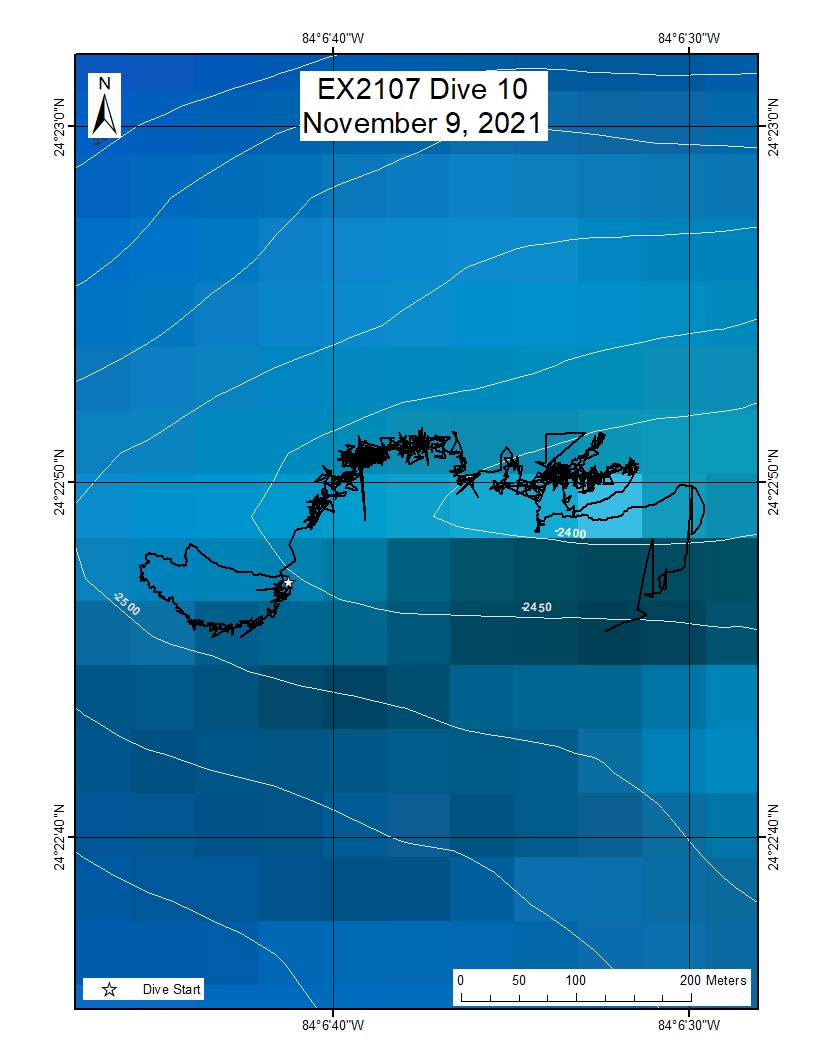
On 9 November 2021, a video of a bigfin squid was captured at a ridge feature off the West Florida Escarpment by an ROV from the NOAAS Okeanos Explorer as part of the Windows to the Deep 2021 expedition.<ref>{{#invoke:citation/CS1|citation |CitationClass=web }}</ref><ref>{{#invoke:citation/CS1|citation |CitationClass=web }}</ref> The squid was found at a depth of Template:Convert.<ref>{{#invoke:citation/CS1|citation |CitationClass=web }}</ref>
ROV SuBastian of Schmidt Ocean Institute observed a bigfin squid in close proximity to a black smoker-type hydrothermal vent on 4 April 2023, during the "In Search of Hydrothermal Lost Cities" expedition. The squid was seen at a depth of Template:Cvt.<ref>{{#invoke:citation/CS1|citation |CitationClass=web }}</ref>
List
Date - Dates are given to the level of precision available from the source material - telemetry displayed is used for observations where an ROV video is the primary source
Observer - Corresponds either to the person who collected the specimen; the vessel the specimen was collected on, or the vessel that observed the specimen for video-only observations.
Location - Given in Latitude/Longitude when available, otherwise the general region is given. For ROV dives with navigation data available, a link to the corresponding dive track is given, unless a more precise location is specified by a secondary source. Some coordinates from commercial ROVs are specified via UTM rather than Latitude/Longitude.
Depth - Supplied based on precision available from collection method for physical specimens; otherwise telemetry from ROV observations is used.
| # | Date | Observer | Location | Depth | Comment | Sources | Video | Collected | Catalog # | ||
|---|---|---|---|---|---|---|---|---|---|---|---|
| 1 | Aug 10, 1883 | Talisman Expedition | 34°46'N, 36°11'W | 3175m | Juvenile or sub-adult, damaged during trawl and missing arms. Retrieved near the Azores. Designated "Chiroteuthopsis Talismani" | <ref name="FisherAndJoubin1907">Template:Cite book</ref> | N/A | Yes | MNHN-IM-1999-23523 | ||
| 2 | September 9th, 1924 | S. S. Pickle | Cape Town | 240fms | Magnapinna sp. C. Collected during surveys by John Gilchrist off South Africa in 1924. Designated "Octopodoteuthopsis sp. A" by G. C. Robson | <ref name="Hardy1956">Template:Cite book</ref><ref name="VecchioneYoung2006">Template:Cite journal</ref><ref name="GilchristRobson1924">Template:Cite book</ref> | N/A | Yes | BMNH 1924.9.9.48 | ||
| 3 | March 18th, 1954 | J. E. Fitch | 30°22'N, 129°45'W | N/A | From Alepisaurus ferox stomach caught by observer | <ref name="VecchioneYoung1998">Template:Cite journal</ref> | N/A | Yes | USNM 885787 | ||
| 4 | May 2-3, 1961 | R/V "Chain" | 11°13'N, 29°54'W to 11°21'N,30°06'W | 0-125fms | Cruise 17
R.H. Backus |
<ref name="MCZ370373">{{#invoke:citation/CS1|citation | CitationClass=web
}}</ref>|| N/A || Yes || MCZ Malacology 370373 | ||||
| 5 | Jan 16, 1966 | R/V Anton Bruun | -34.016666°, -84.966666° | 0-2900m | Magnapinna pacifica | <ref name="MCZ392887">{{#invoke:citation/CS1|citation | CitationClass=web
}}</ref>|| N/A || Yes || MCZ Malacology 392887 | ||||
| 6 | 1985-1987 | N/A | Off Oahu | 0-300m | Unknown larva, described as "big-fin" | <ref name="Young1991">Template:Cite journal</ref> | N/A | Yes | SBMNH 144791 | ||
| 7 | Sept 11th, 1988 | Nautile | 10°42.9'N, 40°53.4'W | 4735m | Vermanaute expedition, RV Nadir supporting |
<ref name="GuerraEtAl2002">Template:Cite journal</ref> |
Magnapinna Archive | No | N/A | ||
| 8 | July 1992 | Nautile | 3°40'N, 2°30'W | 3010m | Equanaute expedition, RV Nadir supporting | N/A | No | N/A | |||
| 9 | July 1992 | Nautile | 3°40'N, 2°30'W | 2950m | Equanaute expedition, RV Nadir supporting, possibly same individual from 9 | N/A | No | N/A | |||
| 10 | April 23, 1995 | David Starr Jordan | 33°49'N, 121°51'W | 0-200m | Cruise 9505, Station 24 | N/A | Yes | USNM 885786 | |||
| 11 | September 16th, 1995 | N/A | 27°09'N, 86°07'W | N/A | M. atlantica holotype | N/A | Yes | USNM 1086800 | |||
| 12 | June 21st, 1997 | Discovery | 37°14'N, 32°18'W | N/A | Captured at Discovery station 13198 #7 | N/A | Yes | BNMH 20060134 | |||
| 13 | November 1, 1998 | DSV Shinkai 6500 | 32°45'S,57°1'E | 2340m | Shinkai 6500 Dive 460
Cruise YK98-08 MODE'98 Leg4 - Atlantis II Fracture Zone - |
<ref name="VecchioneYoungEtAl2001">Template:Cite journal</ref> |
JAMSTEC J-EDI | No | N/A | ||
| 14 | January 2000 | Commercial ROV | 28°37'N,88°00'W | 2195m | ROV operating from Millenium Explorer |
Template:R<ref name="VecchioneEtAl2002">Template:Cite journal</ref> |
Smithsonian Youtube | No | N/A | ||
| 15 | May 2000 | Nautile | 19°32'S, 65°52'E | 2576m | Gimnaut expedition, RV Atalante supporting | N/A | No | N/A | |||
| 16 | October 2000 | DSV Alvin | 27°34.7'N,88°30.6'W | 1940m | RV Atlantis supporting DSV Alvin, WHOI cruise AT3-58 |
Template:R<ref name="YoungSciFri2021">{{#invoke:citation/CS1|citation |
CitationClass=web
}}</ref> |
Smithsonian Youtube Smithsonian Youtube | No | N/A | |
| 17 | May 16th, 2001 | Tiburon | 21.9°N, 158.2° W | 3380m | RV Western Flyer supporting ROV Tiburon Hawaii Cruise |
Template:R<ref>{{#invoke:citation/CS1|citation |
CitationClass=web
}}</ref> |
MBARI Youtube | No | N/A | |
| 18 | September 4th, 2001 | Kaikō ROV | citation | CitationClass=web
}}</ref> |
2586m | KAIKO Dive 208 Cruise KR01-12_leg2 | <ref>{{#invoke:citation/CS1|citation | CitationClass=web
}}</ref> |
JAMSTEC J-EDI | No | N/A |
| 19 | September 13th, 2001 | Kaikō ROV | 19.83670, -154.54330<ref name="USGSMAP"/> | 3890m | KAIKO Dive 215 Cruise KR01-12_leg2 | <ref>{{#invoke:citation/CS1|citation | CitationClass=web
}}</ref> |
JAMSTEC J-EDI | No | N/A | |
| 20 | November 26th, 2003 | Hercules 8 | 26°10'48"N, 94°37'23"W | 2750m | Discoverer Deep Seas supporting ROV Hercules 8 | <ref name="SERPENT1">{{#invoke:citation/CS1|citation | CitationClass=web
}}</ref> |
Magnapinna Archive | No | N/A | |
| 21 | December 29th, 2003 | Hercules 8 | 26°15'N, 94°40'W | 3050m | Discoverer Deep Seas supporting ROV Hercules 8 | <ref name="SERPENT2">{{#invoke:citation/CS1|citation | CitationClass=web
}}</ref> |
N/A | No | N/A | |
| 22 | July 11th, 2004 | R/V G.O. Sars | 42°8'N, 29°3'W | N/A | Bergen Museum
MAR-ECO cruise super station 46, local station 374 |
Template:R | N/A | Yes | ZMBN 77634 | ||
| 23 | May, 2006 | R/V R.S Carney | 2928-2489m | 26°05'00"N, 94°36'30"W | Badly damaged adult male | Template:R | N/A | Yes | FMNH 308253 | ||
| 24 | May 30th, 2006 | DSV Alvin | 2739m | 26°10'51"N, 94°37'22"W | RV Atlantis AT15-03 Dive 4195, subadult male | <ref name="tolwebSubadultMales">{{#invoke:citation/CS1|citation | CitationClass=web
}}</ref> |
N/A | Yes | FMNH 308252 | |
| 25 | November 2007 | RV Polarstern | 3°13'N,15°00'W | 1000-2000m | Cruise ANT XXIV-4 | <ref name="PiatowskiOssenbrugger">{{#invoke:citation/CS1|citation | CitationClass=web
}}</ref> |
N/A | Yes | N/A | |
| 26 | November 11th, 2007 | Commercial ROV | N9485524.76, E1017934.76 (26°07'39.0"N 94°53'51.7"W) converted from UTM | 2500m | Shell Perdido, Alaminos Canyon Block 857 | <ref>{{#invoke:citation/CS1|citation | CitationClass=web
}}</ref><ref name="Hearn"/> |
Magnapinna Archive | No | N/A | |
| 27 | January 16th, 2009 | Triton XLS-22 | Alaminos Canyon Block 258 | 2453m | TXLS-22 from support vessel DMT Emerald | Unpublished SERPENT Project | Magnapinna Archive | No | N/A | ||
| 28 | June 8th, 2009 | Commercial ROV | N1026271.0, E9486831.5 | 2593m | "Eastern Array Installation" | Unpublished SERPENT Project | Magnapinna Archive | No | N/A | ||
| 29 | Feb 25th, 2011 | M/V Meg Skansi | ONSAP Station B246N | 200-600m | Collected by MOC10 net sampling during M/V Meg Skansi cruise MS6 as part of DEEPEND-RESTORETemplate:R | <ref name="JudkinsEtAl2016">Template:Cite journal</ref> | N/A | Yes | N/A | ||
| 30 | Sep 15th, 2011 | M/V Meg Skansi | ONSAP Station SE5D | 200-600m | Collected by MOC10 net sampling during M/V Meg Skansi cruise MS8 as part of DEEPEND-RESTORETemplate:R | <ref name="JudkinsEtAl2016">Template:Cite journal</ref> | N/A | Yes | N/A | ||
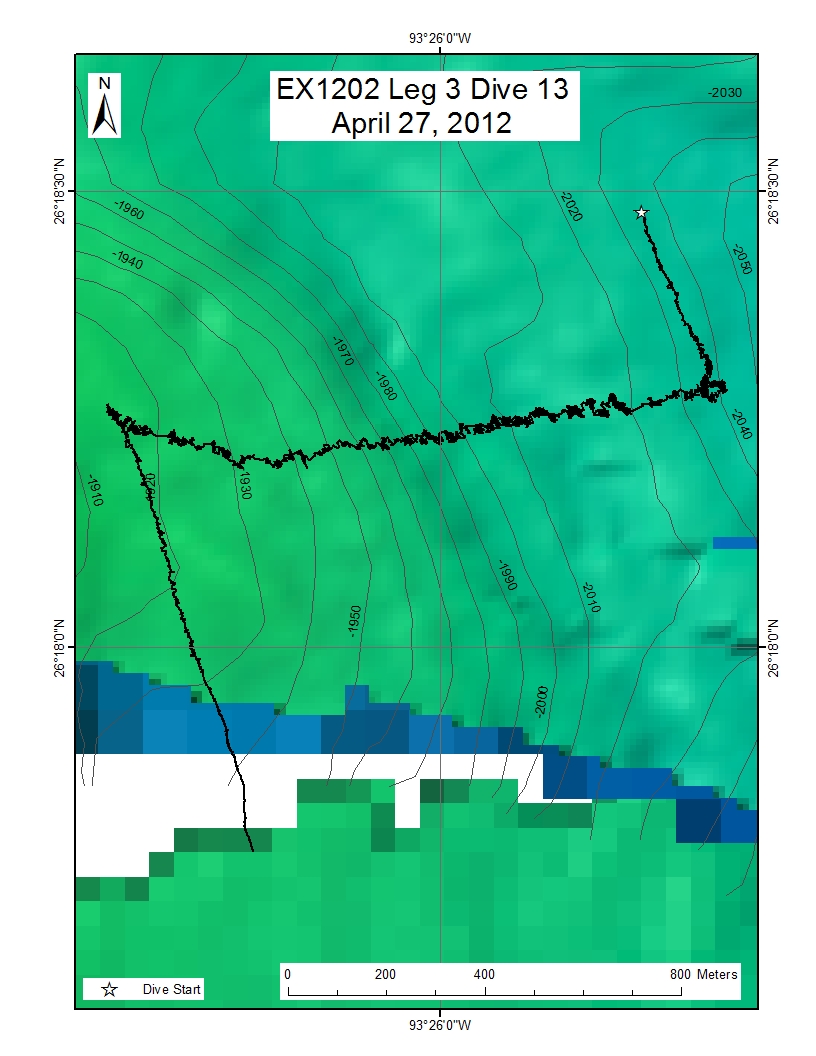
| 31 | April 27th, 2012 | Little Hercules | See dive track | 1961m | NOAA Okeanos Explorer EX2012 Leg3 Dive 13 | <ref>{{#invoke:citation/CS1|citation | CitationClass=web
}}</ref> |
ROV View Camera Platform View | No | N/A | |
| 32 | July 10th, 2013 | Commercial ROV | Walker Ridge 95 | 1578.4m | Unpublished Serpent Project | Magnapinna Archive | No | N/A | |||
| 33 | July 29th, 2013 | Commercial ROV | Mississippi Canyon block 525 | 1784m | Unpublished Serpent Project | Magnapinna Archive | No | N/A | |||
| 34 | November 14th, 2013 | Oceaneering Millenium #57 | 26.13 N 94.88 W | 2388m | OCS Study BOEM 2020-022 | <ref name="BenfieldKupchik2020">Template:Cite book</ref>Template:Rp | N/A | No | N/A | ||
| 35 | June 12th, 2014 | Oceaneering Millenium #115 | 28.15 N 87.60 W | 2278m | OCS Study BOEM 2020-022 | Template:R | N/A | No | N/A | ||
| 36 | April 23rd, 2014 | Abyssal Lander | -37.2200 S -179.7740 W | 4708m | RV Thomas G. Thompson TN309, HADES | <ref name="JamiesonVecchione2021">Template:Cite journal</ref> | N/A | No | N/A | ||
| 37 | June 27th, 2014 | ROV Hercules | 28:43.2808 N 088:06.5962 W | 1687m | Nautilus Expedition NA043 | <ref name="Nautilus2014">{{#invoke:citation/CS1|citation | CitationClass=web
}}</ref>Template:Failed verification |
Unexpected Biology in the Gulf of Mexico | No | N/A | |
| 38 | November 2nd, 2014 | Oceaneering Millenium #115 | 28.59 N 87.84 W | 2317m | OCS Study BOEM 2020-022 | Template:R | N/A | No | N/A | ||
| 39 | November 15th, 2015 | Towed Camera | -34.432, 129.987 | 2178m | RV Investigator | <ref name="OsterhageEtAl2020">Template:Cite journal</ref> | Supplemental Video 1 | No | N/A | ||
| 40 | November 16th, 2015 | Towed Camera | -34.377, 129.985 | 2110m | RV Investigator | Template:R | Supplemental Video 2 | No | N/A | ||
| 41 | January 19, 2016 | ROV Victor | 3664m | Pourquoi Pas? | <ref name="GerdesEtAl2021">Template:Cite journal</ref>Template:Rp | Magnapinna Archive | No | N/A | |||
| 42 | February 14th, 2017 | Commercial ROV | 9°12'25.732"N, 76°49'55.091"W | 1884m | Old Purple Angel Well | <ref name="Guerrero-KommritzEtAl2018">Template:Cite journal</ref> | Magnapinna Archive | No | N/A | ||
| 43 | March 24th, 2017 | FCV 3000 work-class ROV | -35.049, 130.905 | 3060m | REM Etive | Template:R | Supplemental Video 3 | No | N/A | ||
| 44 | March 25th, 2017 | FCV 3000 work-class ROV | -35.049, 130.902 | 3002m | REM Etive | Template:R | Supplemental Video 4 | No | N/A | ||
| 45 | March 25th, 2017 | FCV 3000 work-class ROV | -35.050, 130.904 | 3056m | REM Etive | Template:R | Supplemental Video 5 | No | N/A | ||
| 46 | April 14th, 2017 | Commercial ROV | 9°25'59.282"N, 76°44'54.110"W | 2294.20m | Gorgon 1 Well | Template:R | N/A | No | N/A | ||
| 47 | June 3rd, 2018 | N/A | 30.0255, -19.758333 | 100-200m | Pelagic trawl | <ref>{{#invoke:citation/CS1|citation | CitationClass=web
}}</ref> |
N/A | Yes | ICMC000146 | |
| 48 | September 3rd, 2019 | ROV SuBastian | 1092m | ROV SuBastian Dive 295, Necker Ridge: Bridge or Barrier | <ref>{{#invoke:citation/CS1|citation | CitationClass=web
}}</ref> |
Dive 295 - 6:58:03 | No | N/A | ||
| 49 | January 28th, 2020 | ROV SuBastian | 3000m | ROV SuBastian Dive 312, The Great Australian Deep-sea Coral and Canyon Adventure | <ref>{{#invoke:citation/CS1|citation | CitationClass=web
}}</ref> |
Dive 312 - 2:00:36 | No | N/A | ||
| 50 | March 2021 | DSV Limiting Factor | Philippine Trench | 6212m | <ref>Template:Cite book</ref>Template:R | See inline video | No | N/A | |||
| 51 | December 2021 | ROPOS | Central Indian Ocean | 3000m | citation | CitationClass=web
}}</ref> |
<ref name="ROPOS2021Tweet">{{#invoke:citation/CS1|citation | CitationClass=web
}}</ref> |
ROV ROPOS | No | N/A |
| 52 | November 9th, 2021 | Deep Discoverer | See dive track | Dive 10, Windows to the Deep 2:56:25 | <ref>{{#invoke:citation/CS1|citation | CitationClass=web
}}</ref> |
Highlight | No | N/A | ||
| 53 | April 4th, 2023 | ROV SuBastian | Puy Des Folles Seamount | 1931m | ROV SuBastian Dive 501, In Search of Lost Hydrothermal Cities | <ref>{{#invoke:citation/CS1|citation | CitationClass=web
}}</ref> |
Dive 501 - 9:33:44 | No | N/A | |
| 54 | September 2024 | DSV Bakunawa | Tonga Trench - Pacific Ocean | 3300m | Tonga Trench Expedition | <ref>{{#invoke:citation/CS1|citation | CitationClass=web
}}</ref> |
Inkfish Expeditions | No | N/A | |
| 55 | October 2025 | ROV Hercules | -17.5260, -159.6761 | 5180m | Nautilus Expedition NA176, Dive L1011 | citation | CitationClass=web
}}</ref> |
Rare Bigfin Squid Spotted in Deep Sea of Cook Islands | No | N/A |
See also
References
External links
Template:Sister project Template:Sister project Template:CephBase Genus
- Tree of Life Web Project: Magnapinna
- Cephalopods in Action: Long-armed squid videos Template:Webarchive
- August 2022 Bigfin Squid sighting