Hypochaeris radicata
Template:Short description Template:Speciesbox
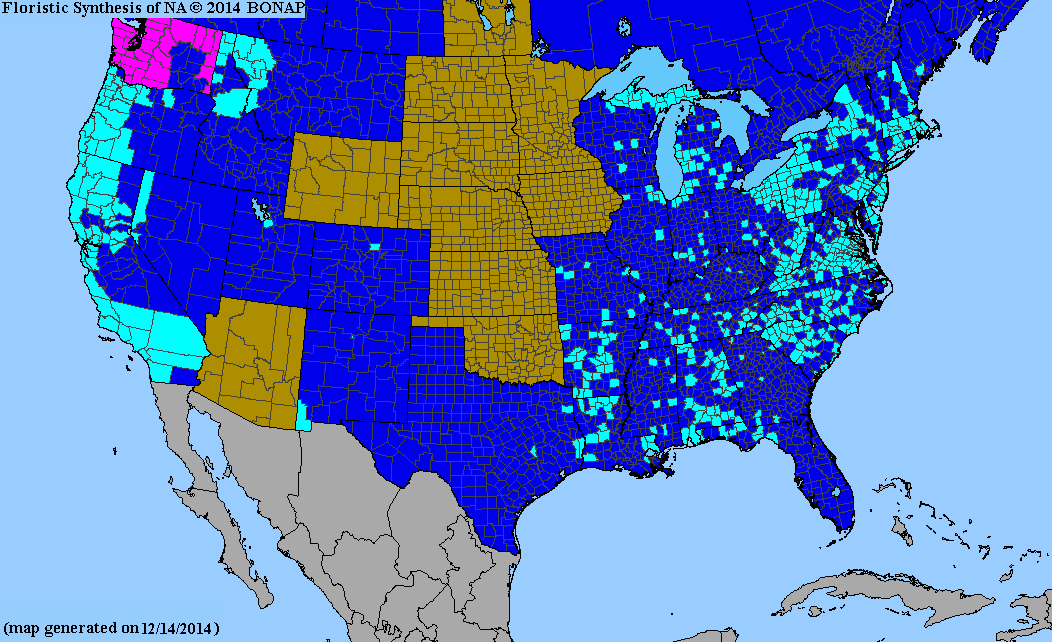
Hypochaeris radicata (sometimes spelled Hypochoeris radicata) – also known as catsear, flatweed,<ref>{{#invoke:citation/CS1|citation |CitationClass=web }}</ref><ref>{{#invoke:citation/CS1|citation |CitationClass=web }}</ref> cat's-ear,<ref name=BSBI07>Template:BSBI 2007</ref> hairy cat's ear,<ref>Template:PLANTS</ref> or false dandelion – is a perennial, low-lying edible herb often found in lawns. The plant is native to Europe,<ref>Altervista Flora Italiana, Hypochaeris radicata L. includes photos and European distribution map</ref> but has also been introduced to the Americas,<ref>Biota of North America Program 2014 county distribution map</ref><ref>Jørgensen, P. M., M. H. Nee & S. G. Beck. (eds.) 2014. Catálogo de las plantas vasculares de Bolivia, Monographs in systematic botany from the Missouri Botanical Garden 127(1–2): i–viii, 1–1744.</ref><ref>Luteyn, J. L. 1999. Páramos, a checklist of plant diversity, geographical distribution, and botanical literature. Memoirs of The New York Botanical Garden 84: viii–xv, 1–278.</ref> Japan,<ref>Flora of China, Hypochaeris radicata Linnaeus, 1753. 假蒲公英猫儿菊 jia pu gong ying mao er ju </ref> Australia,<ref>Atlas of Living Australia, Hypochaeris radicata L., Cat's Ear</ref> and New Zealand, where it can be an invasive weed. It is listed as a noxious weed in the northwestern U.S. state of Washington.<ref>{{#invoke:citation/CS1|citation |CitationClass=web }}</ref>
.jpg)
Botany
The leaves, which may grow up to Template:Convert long, are lobed and covered in coarse hairs, forming a low-lying rosette around a central taproot. Forked stems carry bright yellow flower heads, and when mature these form seeds attached to windborne "parachutes". All parts of the plant exude a milky sap when cut.<ref>Flora of North America, Hypochaeris radicata Linnaeus, 1753. Hairy cat’s ear </ref>
Hypochaeris species are used as food plants by the larvae of some Lepidoptera species including the shark moth.
Etymology and differences from dandelions
Its name is derived from Greek ὑπό 'under' and χοῖρος 'young pig'. Thus the name "should" be spelled Hypochoeris. The adjective radicata means 'with conspicuous roots' in Latin (derived from radix 'root').
In English, catsear is derived from the words cat's ear, and refers to the shape and fine hair on the leaves resembling that of the ear of a cat.
Catsear is also known as false dandelion because it is commonly mistaken for true dandelions. The plants carry similar flowers which form windborne seeds. However, catsear flowering stems are forked and solid, whereas dandelions possess unforked stems that are hollow. Both plants have a rosette of leaves and a central taproot. The leaves of dandelions are jagged in appearance, whereas those of catsear are more lobe-shaped and hairy. The plants have similar uses.
Culinary uses
All parts of the catsear plant are edible; however, the leaves and roots are those most often harvested. The leaves are bland in taste but can be eaten raw in salads, steamed, or used in stir-fries. Some recommend mixing them with other vegetables.<ref>Template:Cite book</ref> Older leaves can become tough and fibrous, but younger leaves are suitable for consumption. In contrast to the edible leaves of dandelion, catsear leaves only rarely have some bitterness. In Crete, Greece, the leaves of a variety called {{#invoke:Lang|lang}} (pachiés) or {{#invoke:Lang|lang}} (agriorádika) are eaten boiled or steamed.<ref>Template:Cite book</ref>
The root can be roasted and ground to form a coffee substitute.
Toxicity
This species is suspected of causing stringhalt in horses if consumed in excess.<ref>{{#invoke:citation/CS1|citation |CitationClass=web }}</ref><ref>*{{#invoke:citation/CS1|citation |CitationClass=web }}</ref>
References
External links
- United States Department of Agriculture Plants profile
- Low, Tim. Wild Herbs of Australia and New Zealand. Rev. ed. Angus and Robertson, 1991. Template:ISBN.
- Template:Commons category-inline
- photo of herbarium specimen at Missouri Botanical Garden, collected in Brazil in 1995