Joseph Force Crater
Template:Short description Template:Use American English Template:Use mdy dates Template:Infobox person
Joseph Force Crater<ref name="flashbak/PA-8536330">{{#invoke:citation/CS1|citation |CitationClass=web }}</ref> (January 5, 1889 – disappeared August 6, 1930; declared legally dead June 6, 1939) was an American lawyer who served as a New York State Supreme Court Justice and mysteriously vanished shortly after the state began an investigation into corruption in New York City. Despite massive publicity, the missing persons case was never solved and was officially closed forty years after Crater was declared dead.
Early life and education
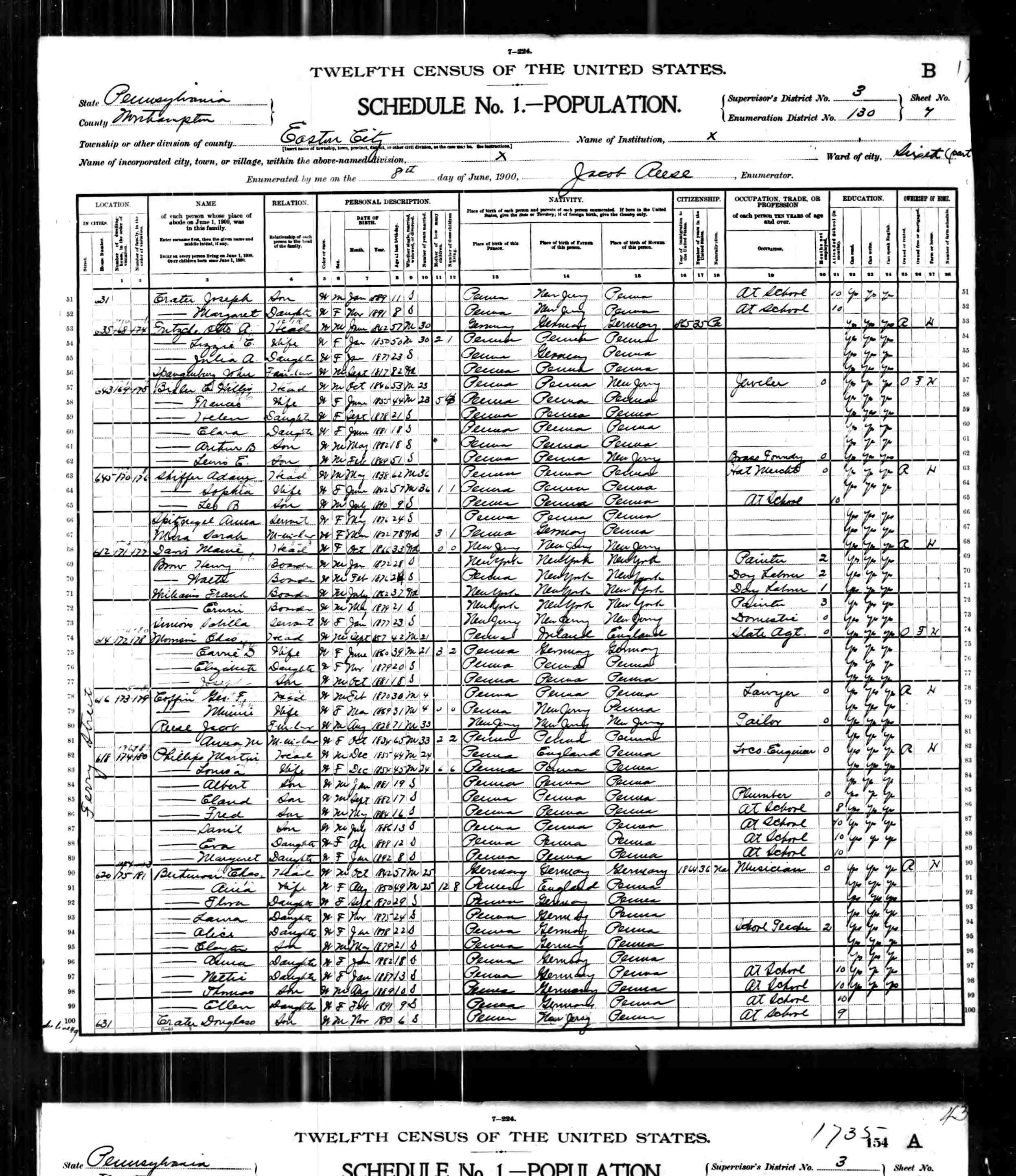
Joseph Crater was born in Easton, Pennsylvania, the eldest of four children of the former Leila Virginia Montague and Frank Ellsworth Crater, a produce market operator<ref name="Pabook">{{#invoke:citation/CS1|citation |CitationClass=web }}</ref> and orchard owner.<ref>records of the members of the First Methodist Church, Easton, Pennsylvania</ref><ref>World War I draft registration</ref><ref>Joseph Force Crater in the 1900 United States census; Easton, Pennsylvania</ref><ref>Harold Leslie Crater, Jr., The descendents [sic] of Moritz Creeter (1703–1772), who arrived at the Port of Philadelphia on the ship Mortonhouse on August 19, 1729 (privately published, 2003), p. 160.</ref> Both parents had immigrated from Ireland.<ref name="nypress/missingest"/> Crater was educated at Lafayette College (class of 1910) and Columbia University, where he was a member of the Sigma Chi fraternity.<ref>The Sigma Chi Quarterly: The Official Organ of the Sigma Chi Fraternity, Volume 26, p. 122</ref> During his time at Columbia, he met Stella Mance Wheeler,<ref name="TOM MEEHAN 1960">Template:Cite news </ref><ref name="flashbak/john-crater-august-6-1930">{{#invoke:citation/CS1|citation |CitationClass=web }}</ref> who was at the time married, and helped her get a divorce. They married seven days after her divorce was finalized, in spring 1917.<ref name="TOM MEEHAN 1960"/><ref name="Pabook" />

Career
Crater opened an office at the Equitable Building in Manhattan, joined Tammany Hall district leader Martin J. HealyTemplate:'s Cayuga Democratic Club, and spent time organizing election workers and representing the club in election law cases.<ref name="nypress/missingest">{{#invoke:citation/CS1|citation |CitationClass=web }}</ref>
Four months before his disappearance, on April 8, 1930, Franklin D. Roosevelt, then New York governor, appointed Crater as Justice of the New York Supreme Court for New York County,<ref name="nypress/missingest"/> which is a trial court, despite the designation "supreme" (New York State's highest court is the Court of Appeals). He issued two published opinions: Rotkowitz v. Sohn, February 8, 1930<ref>{{#invoke:citation/CS1|citation |CitationClass=web }}</ref> involving fraudulent conveyances and mortgage foreclosure fraud;<ref>239 N.Y.S. 639, N.Y.Sup., February 8, 1930.</ref> and Henderson v. Park Central Motors Service, July 11, 1930<ref>{{#invoke:citation/CS1|citation |CitationClass=web }}</ref> dealing with a garage company's liability for an expensive car stolen and wrecked by an ex-convict.<ref>244 N.Y.S. 409, N.Y.Sup., July 11, 1930.</ref>
Attention was later drawn to Crater's liquidating investments worth $16,000 and withdrawing $7,000 from his bank account that spring (together equivalent to about US $Template:Format price in Template:Inflation-year), which was possibly used as a pay-off for his judgeship. He had also given the congratulatory speech at the dinner celebrating George Ewald's judgeship in 1927; accusations of Tammany Hall corruption in that appointment were an initial impetus in the opening of what would become the Seabury Commission in mid-1930.<ref name=Mass/>
Disappearance
Crater and his wife were vacationing at their summer cabin in Belgrade, Maine, in the summer of 1930, shortly after the anti-corruption inquiry began. In late July, Crater received a telephone call. He told his wife nothing about the call other than to say that he had to return to New York City "to straighten those fellows out".<ref name=Mass/> The next day, he arrived at his apartment at 40 Fifth Avenue in Greenwich Village, but instead of dealing with business, he went to Atlantic City, New Jersey, with showgirl Sally Lou Ritz.<ref>Template:Cite book</ref>
Crater returned to Maine on August 1, then traveled back to New York City on August 3, promising his wife that he would return by her birthday on August 9. She stated that he was in good spirits and behaving normally when he left. On the morning of August 6, Crater spent two hours going through his files in his chambers, reportedly destroying several documents. He then had law clerk Joseph Mara cash two checks for him that amounted to US $5,150 (equivalent to about $Template:Format price in Template:Inflation-year). At noon, Crater and Mara carried two locked briefcases to Crater's apartment, where Crater told Mara to take the rest of the day off.<ref name="New York Times">Template:Cite news</ref>
That evening, Crater went to a Broadway ticket agency run by friend Joseph Gransky and reserved one seat for a comedy called Dancing Partner<ref>Template:IBDB show</ref> at the Belasco Theatre; Gransky was surprised because he and Crater had already seen a preview of the show. Crater then ate dinner at Billy Haas's Chophouse at 332 West 45th Street with Ritz and William Klein, a lawyer friend.<ref name=Mass/><ref name="New York Magazine">Template:Cite magazine</ref> Crater's dinner companions gave differing accounts of his departure from the restaurant. Klein initially testified that "the judge got into a taxicab outside the restaurant about 9:30 p.m. and drove west on Forty-fifth Street."<ref>Template:Cite news</ref> This account was initially confirmed by Ritz: "At the sidewalk Judge Crater took a taxicab."<ref>Template:Cite news</ref> Klein and Ritz later changed their story and said that they had entered a taxi outside the restaurant, but Crater had walked down the street.<ref name="CNN Transcripts">{{#invoke:citation/CS1|citation |CitationClass=web }}</ref>
Crater's disappearance did not elicit any immediate reaction. When he did not return to Maine after ten days, his wife began making calls to their friends in New York, asking whether anyone had seen him. His fellow justices became alarmed when Crater failed to appear for the opening of the courts on August 25; they started a private investigation but failed to find any trace of him. The police were notified on September 3, and after that the missing judge was front-page news.<ref>Template:Cite news</ref><ref>Template:Cite news</ref>
Investigation
Detectives discovered that the judge's safe deposit box had been emptied and the two briefcases that Crater and Mara had taken to his apartment were missing. These promising leads were quickly lost amid thousands of false reports from people claiming to have seen the missing judge.<ref name="New York Times"/><ref>Template:Cite news</ref><ref>Template:Cite news</ref><ref>Template:Cite news</ref> A grand jury convened in October 1930 called 95 witnesses and amassed 975 pages of testimony. Mrs. Crater refused to appear.<ref name=Mass/><ref name="proquest.com">Template:Cite news</ref> The jury concluded that "the evidence is insufficient to warrant any expression of opinion as to whether Crater is alive or dead, or as to whether he has absented himself voluntarily, or is the sufferer from disease in the nature of amnesia, or is the victim of crime."<ref>{{#invoke:citation/CS1|citation |CitationClass=web }}</ref><ref>Template:Cite book</ref>
Crater enjoyed the city's nightlife; he socialized with many showgirls in addition to his long-term mistress Connie Marcus.<ref name=Mass/> Two of these women left town abruptly after his disappearance. Sally Lou Ritz (real name Sarah Ritzi; 1907/1908–2000) had dined with Crater the evening that he vanished and was also rumored to be his mistress; she left New York in August or September 1930.<ref>{{#invoke:citation/CS1|citation |CitationClass=web }}</ref><ref>{{#invoke:citation/CS1|citation |CitationClass=web }}</ref> She was found in late September 1930 living in Youngstown, Ohio, with her parents; she said that she had left New York because she had received word that her father was ill. She was still being subjected to interviews by police investigating the Crater case in 1937, by which time she was living in Beverly Hills, California.<ref>Template:Cite news</ref><ref>Template:Cite news</ref> June Brice, another showgirl, had been seen talking to Crater the day before he disappeared. A lawyer acting for Crater's wife argued that Brice had been at the center of a scheme to blackmail Crater (the reason for the bank withdrawals on the day of his disappearance) and that a gangster boyfriend of Brice had killed the judge. Brice disappeared the day that a grand jury was to convene on the case. In 1948, she was discovered in a mental hospital.<ref name="nypress/missingest" />
Crater's jacket was reportedly found in the apartment of Vivian Gordon.<ref name=Mass>Template:Cite magazine</ref> She was involved in high-end prostitution and linked to madam Polly Adler. Gordon had liaisons with a large number of influential businessmen and was the owner, on paper at least, of a number of properties believed to be fronts for illegal activity.<ref name="blogs.smithsonianmag.com">Template:Cite magazine</ref> She was also seen around town with gangster Jack "Legs" Diamond, with whom Crater was rumored to socialize. Crater had known Diamond's former boss, organized crime figure Arnold Rothstein, and had been extremely upset at Rothstein's murder.<ref name="CNN Transcripts" /> Gordon was angry about a conviction that had resulted in her losing custody of her 16 year-old daughter. On February 20, 1931, she met with a lawyer for the Seabury Commission and offered to testify about police graft. She was murdered five days later. The publicity surrounding Gordon's killing led to the resignation of a policeman whom she had accused of framing her, and the suicide of her daughter.<ref name="blogs.smithsonianmag.com"/> The scandal also refocused attention on the corruption investigation, which ultimately led to the resignation of Mayor Jimmy Walker and largely eliminated Tammany Hall's hold on the city, previously weakened by Rothstein and the conflict over his former empire.<ref name="CNN Transcripts" /><ref name="blogs.smithsonianmag.com"/>
Crater's wife found envelopes containing checks, stocks, bonds, and a note from the justice on January 20, 1931, six months after his disappearance. They were in a dresser drawer that had been empty when searched by police. The discovery led to new but ultimately inconclusive leads, and no further trace of Crater was ever found.<ref name="CNN Transcripts" /> The case was officially closed in 1979.<ref name="Janet Cawley 1980">Template:Cite news</ref>
Subsequent events
Mrs. Crater remained at their vacation home in Maine during the search for her husband, until her discovery of the hidden envelopes.<ref name="TOM MEEHAN 1960"/> She was evicted from the Fifth Avenue apartment for non-payment of rent.<ref name="proquest.com"/> In July 1937, when she was reportedly living on $12 per week (Template:Inflation) working as a telephone operator in Maine, she petitioned to have the justice declared officially dead.<ref>Template:Cite news</ref> She married Carl Kunz, a New York City electrical contractor, in Elkton, on April 23, 1938.<ref>Template:Cite news</ref> Kunz's first wife had hanged herself eight days before the wedding.<ref name="Janet Cawley 1980"/> Crater was declared legally dead in 1939;<ref name="TOM MEEHAN 1960" /><ref>Template:Cite news</ref> his widow received $20,561 in life insurance (equivalent to about $Template:Format price in Template:Inflation-year). She separated from Kunz in 1950 and died in 1969 at age 70.<ref name="proquest.com"/>
Mrs. Crater expressed her belief that her husband had been murdered in her own account of the case, The Empty Robe, which was written with freelance writer and journalist Oscar Fraley and published by Doubleday in 1961.<ref>Template:Cite book</ref><ref>Template:Cite news</ref>
On August 19, 2005, authorities revealed that after Queens resident Stella Ferrucci-Good's death at age 91, they had received notes she wrote in which she claimed that her husband, NYPD detective Robert Good, had learned that Crater was killed by Charles Burns, an NYPD officer who also worked as a bodyguard of Murder, Inc. enforcer Abe Reles, and by Burns' brother, Frank. According to the letter, Crater was buried near West Eighth Street in Coney Island, Brooklyn, at the current site of the New York Aquarium.<ref name="nytimes/2005/08/20/20crater" /><ref name="nydailynews/2005/08/19/1930-crater">{{#invoke:citation/CS1|citation |CitationClass=web }}</ref><ref name="abcnews/WNT/1050195">{{#invoke:citation/CS1|citation |CitationClass=web }}</ref> Police reported that no records had been found to indicate that skeletal remains had been discovered at that site when it was excavated in the 1950s.<ref name="nytimes/2005/08/20/20crater">Template:Cite news</ref> Richard J. Tofel, the author of a 2004 book on the Crater case, Vanishing Point, expressed skepticism of Ferrucci-Good's account.<ref name="nytimes/2005/08/20/20crater" />
Popular culture
The phrase "to pull a Judge Crater", or simply "to pull a Crater", means to disappear.<ref>{{#invoke:citation/CS1|citation |CitationClass=web }}</ref> It is no longer widely used. For many years following Crater's disappearance, "Judge Crater, call your office" was a standard gag of nightclub comedians.<ref>{{#invoke:citation/CS1|citation |CitationClass=web }}</ref> As a publicity stunt for their 1933 film Bureau of Missing Persons, First National Pictures promised in advertisements to pay Crater $10,000 (Template:Inflation) if he claimed it in person at the box office.<ref>Template:Cite magazine</ref> Crater's last letter, possibly written on the day of his disappearance, was sold at auction on June 22, 1981, for $700.<ref>Sotheby Parke Bernet, Sale No. 4652E on June 22, 1981, "Printed and Manuscript Americana", Lot 174.</ref> The letter was marked "confidential" and began: "The following money is due me from the persons named. Get in touch with them for they will surely pay their debts." It was incorrectly reported that this letter was Crater's will.<ref>Template:Cite news</ref>
The judge was popularly known amongst friends as "Good Time Joe", from his fun times with showgirls and his love for dancing. After his disappearance, the press would use this nickname as one of the common ways to refer to him, in addition to calling him the "Missingest Man in America".<ref>Template:Cite episode</ref><ref>Template:Cite news</ref><ref>Template:Cite episode</ref><ref>Template:Cite news</ref><ref>{{#invoke:citation/CS1|citation |CitationClass=web }}</ref>
See also
Further reading
References
External links
- Judge Crater Disappearance Possibly Solved August 19, 2005; Fox News via Wayback Machine
- Judge Crater, is that you?; August 19, 2005; MSNBC (includes video)
- 1889 births
- 1930 deaths
- 1930s missing person cases
- 20th-century New York state court judges
- 20th-century American lawyers
- Columbia University alumni
- Lafayette College alumni
- Missing person cases in New York City
- New York (state) Democrats
- New York (state) lawyers
- New York Supreme Court justices
- People declared dead in absentia
- Politicians from Easton, Pennsylvania