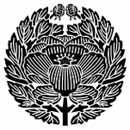
Konoe family
Template:Short description Template:Family name hatnote Template:Infobox Japanese clan
Template:Nihongo is a Japanese aristocratic family.<ref name="papinot24">Papinot, Jacques Edmond Joseph. (1906). Dictionnaire d’histoire et de géographie du Japon; Papinot, (2003). "Konoe," Nobiliare du Japon, p. 24; retrieved 2013-8-13.</ref> The family is a branch of Hokke and,<ref name="amimoto" /> by extension, a main branch of the Fujiwara clan.<ref name="nussbaum260">Nussbaum, Louis-Frédéric. (2005). "Go-sekke" in Japan Encyclopedia, p. 260.</ref>
History

The Konoe claim descent from Konoe Iezane (1179–1242).<ref name="papinot24"/> The origin of the family name was the residence of Iezane's grandfather Konoe Motozane, which was located on a road in Kyoto named "Konoe-Ōji" (近衛大道).<ref>Template:Cite book</ref> Despite Konoe at first being the senior line of the Fujiwara clan, the clan was eventually split up into Five regent houses during the Kamakura period,<ref name="amimoto">Template:Cite book</ref> with each of the five families having the right to assume the regency.<ref name="papinot24"/> During the following Nanboku-chō period, a succession dispute of Konoe emerged, between Tsunetada and his cousin Mototsugu – they served in rival courts, the Southern and the Northern Court respectively; later, when the Southern court lost its political influence in 1392, records of Tsunetada's descendants became lost and have stayed lost ever since.<ref>Template:Cite book</ref>
There were at least five Imperial Consorts who came from the Konoe family,<ref>Template:Cite book</ref><ref>Template:Cite book</ref><ref name="Saki">Template:Cite book</ref><ref>Template:Cite book</ref><ref name="kore">Template:Cite book</ref> including Konoe Sakiko, who was adopted by Toyotomi Hideyoshi in 1586.<ref name="Saki" /> The most recent consort from the Konoe was Template:Ill (近衛維子, 1760–1783), who married the 118th Emperor of Japan, Emperor Go-Momozono; they had one daughter Princess Yoshiko.<ref name="kore" />
In the early 17th century the Konoe family was imperiled, for Konoe Nobutada was the last of his line and had no male heir. He decided to adopt one of his nephews, who was also the fourth son of Emperor Go-Yozei. The child was renamed Konoe Nobuhiro (1599–1649), who later married Nobutada's daughter.<ref>Template:Cite book</ref><ref>Template:Cite book</ref> From there the Konoe lineage was renewed and continued until 1956, when the eldest son of Prime Minister Fumimaro Konoe,<ref name="nussbaum558">Nussbaum, "Konoe Fumimaro" in Japan Encyclopedia, p. 558-559.</ref> Fumitaka, died in the Soviet Union<ref>Template:Cite book</ref> without a legitimate male heir. Fumitaka's wife subsequently adopted his nephew Tadateru Konoe, second son of Fumitaka's sister, as their heir.<ref>Template:Cite book</ref> Tadateru's patrilineal descent, through his biological father Morisada Hosokawa,<ref>Template:Cite book</ref> comes from the Hosokawa clan, a cadet branch of Seiwa Genji and descended from Emperor Seiwa;<ref>Template:Cite book</ref> he also has an elder brother Morihiro Hosokawa, the Prime Minister of Japan from 1993 to 1994. Tadateru married, in 1966, a granddaughter of Emperor Taishō, Yasuko (formerly Princess Yasuko of Mikasa).<ref>{{#invoke:citation/CS1|citation |CitationClass=web }}</ref>
Family Tree
Template:Tree chart/start Template:Tree chart Template:Tree chart Template:Tree chart Template:Tree chart Template:Tree chart Template:Tree chart Template:Tree chart Template:Tree chart Template:Tree chart Template:Tree chart Template:Tree chart Template:Tree chart Template:Tree chart Template:Tree chart Template:Tree chart Template:Tree chart Template:Tree chart Template:Tree chart Template:Tree chart Template:Tree chart Template:Tree chart Template:Tree chart Template:Tree chart Template:Tree chart Template:Tree chart Template:Tree chart Template:Tree chart Template:Tree chart Template:Tree chart Template:Tree chart Template:Tree chart Template:Tree chart Template:Tree chart Template:Tree chart Template:Tree chart Template:Tree chart Template:Tree chart Template:Tree chart Template:Tree chart Template:Tree chart Template:Tree chart Template:Tree chart Template:Tree chart Template:Tree chart Template:Tree chart Template:Tree chart Template:Tree chart Template:Tree chart Template:Tree chart Template:Tree chart Template:Tree chart Template:Tree chart Template:Tree chart Template:Tree chart Template:Tree chart Template:Tree chart Template:Tree chart Template:Tree chart Template:Tree chart Template:Tree chart Template:Tree chart Template:Tree chart Template:Tree chart Template:Tree chart Template:Tree chart Template:Tree chart Template:Tree chart Template:Tree chart/end <ref name="kon">{{#invoke:citation/CS1|citation |CitationClass=web }}</ref><ref>Template:Cite book</ref>
Tokiwai family
The Template:Nihongo was founded by a son of Konoe Tadahiro, Gyōki (尭熈), who was the lead Buddhist monk of Senju-ji, and he took the family name "Tokiwai" since 1872.<ref name="Tokiwai" />
Template:Tree chart/start Template:Tree chart Template:Tree chart Template:Tree chart Template:Tree chart Template:Tree chart Template:Tree chart Template:Tree chart Template:Tree chart Template:Tree chart Template:Tree chart/end
<ref name="Tokiwai">{{#invoke:citation/CS1|citation |CitationClass=web }}</ref><ref>{{#invoke:citation/CS1|citation |CitationClass=web }}</ref>
Miyagawa family
Template:Tree chart/start Template:Tree chart Template:Tree chart Template:Tree chart Template:Tree chart Template:Tree chart Template:Tree chart Template:Tree chart Template:Tree chart Template:Tree chart Template:Tree chart Template:Tree chart Template:Tree chart Template:Tree chart/end
<ref>{{#invoke:citation/CS1|citation |CitationClass=web }}</ref><ref>Template:Cite book</ref><ref>{{#invoke:citation/CS1|citation |CitationClass=web }}</ref>