RPG-7
Template:Short description Template:Use dmy dates Template:Infobox weapon
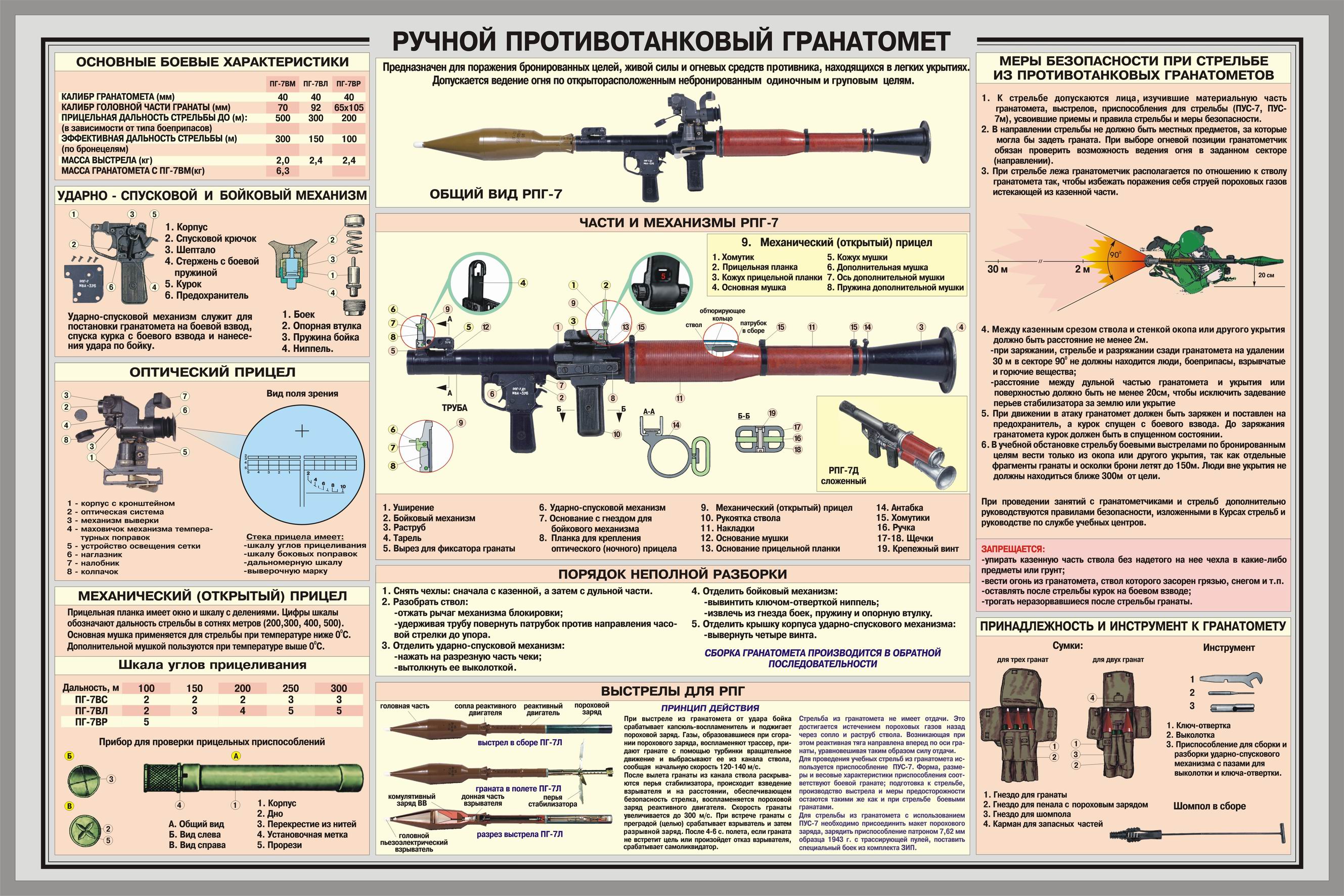
The RPG-7Template:Efn is a portable, reusable, unguided, shoulder-launched, anti-tank, grenade launcher. The RPG-7 and its predecessor, the RPG-2, were designed by the Soviet Union, and are manufactured by the Russian company Bazalt. The weapon has the GRAU index (Russian armed forces index) 6G3.
The ruggedness, simplicity, low cost, and effectiveness of the RPG-7 has made it the most widely used anti-armor weapon in the world. Roughly 40 countries use the weapon; it is manufactured in several variants by nine countries. It is popular with irregular and guerrilla forces.
Widely produced, the most commonly seen major variations are the RPG-7D (десантник – desantnik – paratrooper) model, which can be broken into two parts for easier carrying; and the lighter Chinese Type 69 RPG. DIO of Iran manufactures RPG-7s with olive green handguards, H&K style pistol grips, and a commando variant.
The RPG-7 was first delivered to the Soviet Army in 1961 and deployed at the squad level. It replaced the RPG-2, having clearly out-performed the intermediate RPG-4 design during testing. The Russian Federation produces the RPG-7V2, capable of firing standard and dual high-explosive anti-tank (HEAT) rounds, high explosive/fragmentation, and thermobaric warheads, with a UP-7V sighting device fitted (used in tandem with the standard 2.7× PGO-7 optical sight) to allow the use of extended range ammunition. The RPG-7D3 is the equivalent paratrooper model. Both the RPG-7V2 and RPG-7D3 were adopted by the Russian Ground Forces in 2001.
Description

The launcher is reloadable and based around a steel tube, Template:Convert in diameter, Template:Convert long, and weighing Template:Convert. The middle of the tube is wood wrapped to protect the user from heat and the end is flared. Sighting is usually optical with a back-up iron sight, and passive infrared and night sights are also available. The launchers designated RPG-7N1 and RPG-7DN1 can thus mount the multi-purpose night vision scope 1PN51<ref>Template:Cite book</ref> and the launchers designated RPG-7N2 and RPG-7DN2 can mount the multi-purpose night vision scope 1PN58.<ref>Template:Cite book</ref>
As with similar weapons, the grenade protrudes from the launch tubes. It is Template:Convert in diameter and weighs between Template:Convert<ref name="rusarm.ru">{{#invoke:citation/CS1|citation |CitationClass=web }}</ref> and Template:Convert. It is launched by a gunpowder booster charge, giving it an initial speed of Template:Convert, and creating a cloud of light grey-blue smoke that can give away the position of the shooter.<ref>{{#invoke:citation/CS1|citation |CitationClass=web }}</ref> The rocket motorTemplate:Efn ignites after Template:Convert and sustains flight out to Template:Convert at a maximum velocity of Template:Convert. The grenade is stabilized by two sets of fins that deploy in-flight: one large set on the stabilizer pipe to maintain direction and a smaller rear set to induce rotation. The grenade can fly up to Template:Convert; the fuze sets the maximum range, usually Template:Convert.<ref>Template:Cite magazine</ref>
Propulsion system

According to the United States Army Training and Doctrine Command (TRADOC) Bulletin 3u (1977) Soviet RPG-7 Antitank Grenade Launcher—Capabilities and Countermeasures, the RPG-7 munition has two sections: a "booster" section and a "warhead and sustainer motor" section. These must be assembled into the ready-to-use grenade. The booster consists of a "small strip powder charge" that serves to propel the grenade out of the launcher; the sustainer motor then ignites and propels the grenade for the next few seconds, giving it a top speed of Template:Convert. The TRADOC bulletin provides anecdotal commentary that the RPG-7 has been fired from within buildings, which agrees with the two-stage design. It is stated that only a Template:Convert standoff to a rear obstruction is needed for use inside rooms or fortifications. The fins not only provide drag stabilization, but are designed to impart a slow rotation to the grenade.Template:Citation needed
Due to the configuration of the RPG-7 sustainer/warhead section, it responds counter-intuitively to crosswinds. A crosswind will tend to exert pressure on the stabilizing fins, causing the projectile to turn into the wind (see Weathervane effect). While the rocket motor is still burning, this will cause the flight path to curve into the wind. The TRADOC bulletin explains aiming difficulties for more distant moving targets in crosswinds at some length.
Variants

Based on the standard RPG-7, a lightweight airborne version with a detachable barrel was developed, along with a series of modifications differing in sighting systems:
- RPG-7 (GRAU index — 6G3)
- The first model adopted in 1961. Equipped with the PGO-7 optical sight.
- RPG-7V (GRAU index — 6G3)
- Already in the early 1960s, the RPG-7 was equipped with the PGO-7V sight with corrected aiming angles, and since then has been designated RPG-7V.<ref>Template:Cite book</ref>
- RPG-7D (GRAU index — 6G5)
- Airborne version with detachable barrel and bipod.<ref name="milpari">{{#invoke:citation/CS1|citation
|CitationClass=web }}</ref> Adopted in 1963.
- RPG-7N / RPG-7DN (GRAU index — 6G3 and 6G5)
- Modifications of RPG-7V and RPG-7D equipped with night sights PGN-1, NSPU, or NSPUM (GRAU index - 1PN58)<ref name="milpari" />
- RPG-7V1 (GRAU index — 6G3-1)
- 1988 modification with PGO-7V3 optical sight, calibrated for new PG-7VR and TBG-7V rounds, as well as all earlier rounds. A removable bipod was also added.<ref>Template:Cite book</ref>
- RPG-7D1 (GRAU index — 6G5M)
- 1988 modification of the airborne version with PGO-7V3 sight<ref name="milpari" />
- RPG-7V2 (GRAU index — 6G3-2)
- 2001 modification with the universal UP-7V sighting device<ref name="milpari" />
- RPG-7V2 "Gaya"
- Azerbaijani modification from 2012 with optical sight.
- RPG-7D2 (GRAU index — 6G5M2)
- 2001 airborne variant with UP-7V universal sighting device<ref name="milpari" />
- RPG-7D3 (GRAU index — 6G5M3)
- 2001 modification, airborne version of the RPG-7V2<ref name="milpari" />
- B41M
- A Vietnamese copy of the RPG-7. Its vented tube is divided into two threaded sections, designed to reinforce the launcher and allow it to fire more powerful warheads.
- Airtronic USA RPG-7
- U.S.-made clone of the RPG-7. As of 2013, it was reportedly in service with the special operations forces of Peru.
- Airtronic USA Mk.777
- U.S.-made lightweight version of the RPG-7, weighing only 3.5 kg. Service life of about 500–1000 rounds.<ref>{{#invoke:citation/CS1|citation
|CitationClass=web }}</ref>
Ammunition


I) The head contains Template:Ordered list II) The rocket motor consists of Template:Ordered list III) The booster charge includes Template:Ordered list
The RPG-7 can fire a variety of warheads for anti-armor (HEAT, PG-Protivotankovaya Granata) or anti-personnel (HE, OG-Oskolochnaya Granata) purposes, usually fitting with an impact (PIBD) and a 4.5 second fuze. Armor penetration is warhead dependent and ranges from Template:Convert of RHA; one warhead, the PG-7VR, is a 'tandem charge' device, used to defeat reactive armor with a single shot.Template:Citation needed The Russian Ministry of Defense said in December 2023 that it has modified the RPG-7V grenade launcher in order to shoot 82-mm mines.<ref>{{#invoke:citation/CS1|citation |CitationClass=web }}</ref>
Current production ammunition for the RPG-7V2 consists of four main types:
- PG-7VL [c.1977] – improved Template:Convert HEAT warhead effective against most vehicles and fortified targets.<ref name="rusarm.ru"/>
- PG-7VR [c.1988]Template:Citation needed – tandem charge warhead designed to penetrate up to Template:Convert rolled homogeneous armour (RHA) equivalence of explosive reactive armor (ERA) and the conventional armor underneath, or penetrate up to 900mm RHA without ERA. It has a range of Template:Convert.<ref>{{#invoke:citation/CS1|citation
|CitationClass=web }}</ref>
- TBG-7V Tanin [c.1988] – Template:Convert thermobaric warhead for anti-personnel and urban warfare.Template:Citation needed
- OG-7V [c.1999] – Template:Convert fragmentation warhead for anti-personnel warfare. Has no sustainer motor.Template:Citation needed
Other warhead variants include:
- PG-7V [c.1961] – baseline Template:Convert HEAT warhead capable of penetrating Template:Convert RHA.<ref>RPG-7 antitank grenade launcher (USSR / Russia) Template:Webarchive – Modernfirearms.net</ref>
- PG-7VM [c.1969] – improved Template:Convert HEAT warhead capable of penetrating Template:Convert RHA.
- PG-7VS [c.1972] – improved Template:Convert HEAT warhead capable of penetrating Template:Convert RHA.
- PG-7VS1 [c.mid-1970s] – cheaper PG-7VS version capable of penetrating Template:Convert RHA.
- GSh-7VT [c.2013] – anti-bunker warhead with cylindrical follow-through blast-fragmentation munition followed by explosively formed penetrator.<ref>FKP GkNIPAS completes development of anti-bunker round for RPG-7V2 grenade launcher Template:Webarchive – Janes.com, 30 June 2013</ref>
- OGi-7MA [unknown] – anti-personnel fragmentation munition developed for the Bulgarian ATGL-L. improved equivalent to the Soviet OG-7V. Compatible with RPG-7.<ref>Bulgarian OGi-7MA rounds were delivered to Bakhmut – mil.in.ua, 26 February 2023</ref>
Specifications
Manufacturer specifications for the RPG-7V1.<ref>{{#invoke:citation/CS1|citation |CitationClass=web }}</ref>
| Name | Type | Image | Weight | Explosive weight<ref>Per Ordata Template:Webarchive</ref><ref>Per [1] Template:Webarchive defense-update RPG-29 due to PG-29V and PG-7VR has same warhead</ref> | Diameter | Penetration | Lethal radius | |
|---|---|---|---|---|---|---|---|---|
| PG-7VL | Single-stage HEAT | Template:Convert | Template:Convert OKFOL (95% HMX + 5% wax) | Template:Convert | >Template:Convert RHA | |||
| PG-7VR | Tandem charge HEAT | Template:Convert | Template:Convert OKFOL (95% HMX + 5% wax) | Template:Convert/Template:Convert | Template:Convert RHA (with reactive armor) Template:Convert RHA (without reactive armor<ref> “Domestic anti-tank grenade launcher systems”, A. Lovi. “Weapons and ammunition”, A.V. Babkin, V.A. Veldanov, E.F. Gryaznov and others.</ref>) |
|||
| OG-7V | Fragmentation | Template:Convert | Template:Convert A-IX-1 | Template:Convert | Template:Convert (vs. body armor)<ref>Template:Cite book</ref><ref>{{#invoke:citation/CS1|citation | CitationClass=web
}}</ref> | ||
| TBG-7V | Thermobaric | Template:Convert | Template:Convert ОМ 100МИ-3Л + Template:Convert A-IX-1 (as thermobaric explosive booster) | Template:Convert | Template:Convert |


Hit probabilities
A 1976 U.S. Army evaluation of the weapon gave the hit probabilities on a Template:Convert panel moving sideways at Template:Convert.<ref name="TRADOC1">Template:Cite book</ref> Crosswinds cause additional issues as the round steers into the wind; in an Template:Convert wind, firing at a stationary tank sized target, the gunner cannot expect to get a first-round hit more than 50% of the time at Template:Convert.<ref>Template:Cite book</ref>
| Range m (ft) |
Percent |
|---|---|
| Template:Convert | 100 |
| Template:Convert | 96 |
| Template:Convert | 51 |
| Template:Convert | 22 |
| Template:Convert | 9 |
| Template:Convert | 4 |
History of use
The RPG-7 was first used in 1967 by Egypt during the Six-Day War, and by the Viet Cong during the Vietnam War, but it did not see widespread usage in Vietnam until the following year.Template:Sfn
The RPG-7 was introduced to North Vietnam starting in 1966 was widely used by North Vietnamese forces and the Viet Cong during the Vietnam War. It was a crucial weapon for the Vietnamese, especially against American tanks and other armored vehicles. It was supplied to them by the Soviet Union and China (China produced a license-built version called the Type 65 RPG.).<ref>{{#invoke:citation/CS1|citation |CitationClass=web }}</ref><ref>{{#invoke:citation/CS1|citation |CitationClass=web }}</ref>
The RPG-7 was used by the Provisional Irish Republican Army in Northern Ireland from 1969 to 2005, particularly in Lurgan, County Armagh, against British Army observation posts and the towering military base at Kitchen Hill in the town.<ref name="Oppenheimer, A.R. 2009 p. 227">Oppenheimer, A. R. (2009). IRA. The Bombs and the Bullets: A history of deadly ingenuity. Dublin: Irish Academic Press, p. 227. Template:ISBN, pp. 240–241.</ref> The IRA also used them in Catholic areas of West Belfast against British Army armoured personnel carriers (APCs) and Army forward operating bases (FOBs). Beechmount Avenue in Belfast became known as "RPG Avenue" after attacks on British troops.<ref>{{#invoke:citation/CS1|citation |CitationClass=web }}</ref>
In Mogadishu, Somalia, RPG-7s were used to down two U.S. Army Black Hawk helicopters in 1993.<ref>{{#invoke:citation/CS1|citation |CitationClass=web }}</ref><ref>Template:Cite book</ref>
During the first and second Chechen wars, the Chechen Republic of Ichkeria used RPG-7s which they had captured from Soviet bases and used them against Russian armored columns. During the first war, Russians may have lost 100 tanks and 250 armoured fighting vehicles (AFVs) in Grozny.Template:Sfn The Chechens were able to knock out T-72s with three or four RPG-7 hits. Against T-72s with explosive reactive armor, the Chechens fired an RPG in close range (within Template:Convert) to detonate the armor and followed this with RPG hits on the then exposed area of the tank, also from close range.Template:Sfn The RPG-7 was also effective against AFVs, buildings and personnel.Template:Sfn
The PG-7VR has been used by Iraqi insurgents.<ref>Photo: Mystery Missile Solved</ref> On 28 August 2003, it achieved a mobility kill against an American M1 Abrams hitting the left side hull next to the forward section of the engine compartment.<ref>Army Times: "'Something' Felled An Abrams Tank In Iraq - But What? Mystery Behind Aug. 28 Incident Puzzles Army Officials"</ref>
During the War in Afghanistan (2001–2021), several M1A2 Abrams were temporarily disabled by RPG-7 hits.Template:Sfn
Users


- Template:Flag<ref name="jones2009">Jones, Richard D. Jane's Infantry Weapons 2009/2010. Jane's Information Group; 35 edition (27 January 2009). Template:ISBN.</ref>
- Template:Flag Albania mainly owns the Type 69 rocket launcher, a Chinese copy of the RPG-7. They also have a locally manufactured variant called the "Tip-57." Both are inherited from the communist era and have been kept in storage. In 2022 the MoD published videos on their official YouTube channel where the ground forces were seen using them while training that same year.<ref name="jones2009" />
- Template:Flag<ref name="jones2009" />
- Template:Flag<ref name="jones2009" />
- Template:Flag<ref name="jones2009" />
- Template:Flag<ref>Template:Cite book</ref>
- Template:Flag<ref name="jones2009" />
- Template:BAN: Chinese Type 69 RPG variant used by Bangladesh Army.<ref name="SAS 2011 1">Template:Cite book</ref>
- Template:Flag<ref name="jones2009" />
- Template:Flag<ref name="jones2009" />
- Template:Flag<ref name="jones2009" />
- Template:Flag: Produced locally by Arsenal Corporation as ATGL-L.<ref>{{#invoke:citation/CS1|citation
|CitationClass=web }}</ref><ref>ATGL-L anti-tank grenade launcher Template:Webarchive, arsenal.bg</ref>
- Template:Flag<ref>{{#invoke:citation/CS1|citation
|CitationClass=web }}</ref><ref name="BFA-Mali">Template:Cite journal</ref>
- Template:Flag<ref name="jones2009" />
- Template:Flag<ref name="jones2009" />
- Template:Flag<ref name="jones2009" />
- Template:Flag<ref name="jones2009" />
- Template:Flag: Type 69 reverse-engineered copy.Template:Sfn
- Template:Flag<ref name="jones2009" />
- Template:Flag<ref name="jones2009" />
- Template:Flag<ref name="jones2009" />
- Template:Flag<ref name="jones2009" />
- Template:Flag<ref name="jones2009" />
- Template:Flag<ref name="jones2009" />
- Template:Flag<ref name="jones2009" />
- Template:Flag:<ref name="jones2009" /> Locally produced without license as PG-7 by the Sakr Factory for Developed Industries.Template:Sfn
- Template:Flag
- Template:Flag<ref name="jones2009" />
- Template:Flag<ref name="jones2009" />
- Template:Flag<ref name="altair.pl">{{#invoke:citation/CS1|citation
|CitationClass=web }}</ref>
- Template:Flag: Modified version "RPG-7D" locally produced by STC Delta.<ref>{{#invoke:citation/CS1|citation
|CitationClass=web }}</ref><ref name="geo-army">{{#invoke:citation/CS1|citation |CitationClass=web }}</ref><ref>{{#invoke:citation/CS1|citation |CitationClass=web }}</ref>
- Template:Flag<ref name="jones2009" />
- Template:Flag<ref name="jones2009" />
- Template:Flag<ref name="jones2009" />
- Template:Flag<ref name="honduras">{{#invoke:citation/CS1|citation
|CitationClass=web }}</ref>
- Template:Flag<ref>Template:Cite book</ref>
- Template:Flag<ref>{{#invoke:citation/CS1|citation
|CitationClass=web }}</ref> Bulgarian Made ATGL-L<ref>{{#invoke:citation/CS1|citation |CitationClass=web }}</ref>
- Template:Flag<ref name="jones2009" /> Produced locally as Sageg.Template:Sfn
- Template:Flag<ref name="jones2009" /> Produced locally as Al-Nassira from the 1980s by Ba'athist Iraq.Template:SfnTemplate:Sfnp
- Template:Flag: Large stocks held as secondary ATW.Template:Sfn Rounds produced locally.<ref>Katz, Samuel (1986) Israeli Defence Forces Since 1973. Osprey Template:ISBN</ref>
- Template:Flag<ref name="jones2009" />
- Template:KUR<ref>{{#invoke:citation/CS1|citation
|CitationClass=web }}</ref>
- Template:Flag<ref name="jones2009" />
- Template:Flag<ref name="jones2009" />
- Template:Flag<ref name="jones2009" />
- Template:Flag<ref name="jones2009" />
- Template:Flag<ref name="jones2009" />
- Template:Flag<ref name="Beyond Blue Helmets">Template:Cite book</ref>
- Template:Flag: Used by both the Liberian Army and guerrilla factions in the Liberian Civil War.Template:Sfn
- Template:Flag<ref name="jones2009" /> (used by both sides in the Libyan Civil War)
- Template:Flag<ref name="jones2009" />
- Template:Flag: Bulgarian ATGL-L versions are purchased and used since the early 2000s<ref>{{#invoke:citation/CS1|citation
|CitationClass=web }}</ref><ref>Template:Cite news</ref>
- Template:Flag<ref>Template:Cite news</ref>
- Template:Flag<ref name="jones2009" />
- Template:Flag<ref name="jones2009" />
- Template:Flag:<ref name="jones2009" />
- Template:Flag<ref name="jones2009" />
- Template:Flag<ref name="jones2009" />
- Template:Flag: Non state-users.<ref>Template:Cite journal</ref>
- Template:Flag: MA-10 RPG made by Myanmar Directorate of Defence Industries.<ref>{{#invoke:citation/CS1|citation
|CitationClass=web }}</ref>
- Template:Flag<ref name="jones2009" />
- Template:Flag: Produced under license by the Defence Industries Corporation of Nigeria<ref name="jones2009" /><ref>{{#invoke:citation/CS1|citation
|CitationClass=web }}</ref>
- Template:Flag<ref>{{#invoke:citation/CS1|citation
|CitationClass=web }}</ref>
- Template:Flag<ref name="jones2009" />
- Template:MKD<ref name="jones2009" />
- Template:Flag: Used by the Pakistan Army and paramilitary forces.<ref name="jones2009"/> RPG-7V version made under license by Pakistan Machine Tool Factory.<ref>Template:Cite journal</ref><ref>Template:Cite journal</ref>
- Template:Flag<ref name=Alpers>Template:Cite book</ref>
- Template:Flag: The army has three different variants: 250 ATGL-L2 from Bulgaria, 30 Type 69 from China, and 744 RPG-7V2 from Russia.<ref name="APDJ_RPG">{{#invoke:citation/CS1|citation
|CitationClass=web }}</ref>
- Template:Flag:<ref name="jones2009" /> Produced RPG-7 and RPG-7W variants.Template:Sfn
- Template:Flag:<ref name="jones2009" /> Produced locally by SC Carfil SA from Brașov as AG-7 (Romanian: Aruncătorul de Grenade 7, Grenade Launcher 7).<ref>{{#invoke:citation/CS1|citation
|CitationClass=web }}</ref>
- Template:Flag<ref name="jones2009" />
- Template:Flag<ref name="jones2009" />
- Template:Flag: Used by the Polisario Front.<ref>Template:Cite book</ref>
- Template:Flag<ref name="jones2009" />
- Template:Flag<ref name="jones2009" />
- Template:Flag: Made by PPT Namenska.<ref>{{#invoke:citation/CS1|citation
|CitationClass=web }}</ref>
- Template:Flag<ref name="jones2009" />
- Template:Flag<ref name="jones2009" />
- Template:Flag<ref name="jones2009" />
- Template:Flag: South African National Defence Force.<ref name="army">{{#invoke:citation/CS1|citation
|CitationClass=web }}</ref>
- Template:Flag: South Sudan Democratic Movement, Sudan Liberation Movement/Army, South Sudan Defence Forces, Sudan People's Liberation Army used RPG-7, Type 69s and Iranian-made RPGs.<ref name="SAS 2014 chapter 7">Template:Cite book</ref>
- Template:Flag
- Template:Flag: Made by Military Industry Corporation as the Sinar.<ref>Sinar Light Antitank Rocket Launcher Template:Webarchive Retrieved on 17 March 2009.</ref>
- Template:Flag: Used by the Military of Suriname.<ref name="jones2009" />
- Template:Flagicon Syria<ref name="jones2009" />
- Template:Flag:<ref name="jones2009" />
- Template:Flag<ref name="jones2009" />
- Template:Flag:<ref name="jones2009" />
- Template:Flag:<ref name="jones2009"/>
- Template:Flag:<ref name="jones2009" /> Produced locally.
- Template:Flag<ref name="jones2009" />
- Template:Flag:<ref name="jones2009" /> Locally produced and designated as RPG7V-VN. Also popularly recognized under the designation B-41.Template:Sfn
- Template:Flag<ref name="jones2009" />
- Template:Flag<ref name="jones2009" />
- Template:Flag<ref name="jones2009" />
Non-state users
- Template:Flagicon Al-Quds Brigades
- Template:Flag<ref>{{#invoke:citation/CS1|citation
|CitationClass=web }}</ref>
- New Irish Republican Army<ref name=":0" />
- Template:Flag<ref name="national"/>
- Template:Flag<ref>{{#invoke:citation/CS1|citation
|CitationClass=web }}</ref>
- File:Provisional Irish Republican Army Badge.svg Provisional Irish Republican Army<ref>Template:Cite news</ref>
- Template:Flagicon Qassam Brigades
- Template:Flag<ref name="national"/>
- Template:Flag<ref name="national">{{#invoke:citation/CS1|citation

|CitationClass=web }}</ref>
- File:Flag of the Ulster Volunteer Force.svg Ulster Volunteer Force<ref name=":0">Template:Cite news</ref>

Former users
- Template:Flag<ref name="jones2009" />
Conflicts
1960s
- Vietnam War (1955–1975): First used in 1967.Template:Sfn
- Basque conflict (1959–2011)
- Laotian Civil War (1960–1975)
- Guatemalan Civil War (1960-1996)
- Portuguese Colonial War (1961–1976)
- Rhodesian Bush War (1964–1979)
- Colombian conflict (1964–present)
- Communist insurgency in Thailand (1965–1983)
- South African Border War (1966–1990)
- Six Day War (1967)Template:Sfn
- Cambodian Civil War (1967–1975)
- The Troubles (late 1960s–1998)
1970s
- Yom Kippur War (1973)Template:Sfn
- Ethiopian Civil War (1974–1991)
- Lebanese Civil War (1975–1990)
- Western Sahara War (1975–1991)
- Angolan Civil War (1975–2002)
- Uganda–Tanzania War (1978–1979)
- Cambodian–Vietnamese War (1978–1979)
- Nicaraguan Revolution (1978–1990)
- Sino-Vietnamese War (1979)
- Soviet–Afghan War (1979–1989)Template:Sfn
- Salvadoran Civil War (1979–1992)
1980s
- Iran-Iraq War (1980–1988)
- Internal conflict in Peru (1980–present)
- 1982 Lebanon War (1982)
- Sri Lankan Civil War (1983–2009)<ref>{{#invoke:citation/CS1|citation
|CitationClass=web }}</ref>
- Second Sudanese Civil War (1983–2005)
- South Lebanon conflict (1985–2000)
- Thai–Laotian Border War (1987–1988)
- First Nagorno-Karabakh War (1988–1994)
- First Liberian Civil War (1989–1997)
1990s
- Gulf War (1990–1991)Template:Sfn
- Rwandan Civil War (1990–1994)
- Cenepa War (1995)
- Somali Civil War (1991–present)Template:Sfn
- First Chechen War (1994–1996)Template:Sfn
- First Congo War (1996–1997)
- Eritrean–Ethiopian War (1998–2000)
- Second Congo War (1998–2003)
- Second Chechen War (1999–2009)Template:Sfn
2000s
2010s
- Syrian Civil War (2011–present)
- First Libyan Civil War (2011)
- Central African Republic Civil War (2012–present)
- War in Iraq (2013–2017)
- South Sudanese Civil War (2013–2020)
- Second Libyan Civil War (2014–2020)
- Yemeni Civil War (2014–present)
2020s
- Tigray War (2020–2022)
- Russian invasion of Ukraine (2022–present)
- War in Amhara (2023–present)
- Gaza war (2023–present)
- Cambodian–Thai border dispute (2025)
See also
- Template:Lwc
- Template:Lwc
- Template:Lwc
- Template:Lwc
- Template:Lwc
- Template:Lwc
- Template:Lwc
- B40 (RPG) – (Vietnam)
- Template:Lwc