Waldorf Astoria New York
Template:Short description Template:Redirect Template:Good article Template:Use mdy dates Template:Use American English Template:Infobox hotel
The Waldorf Astoria New York is a luxury hotel and condominium residence in the Midtown Manhattan neighborhood of New York City, New York. The structure, at 301 Park Avenue between 49th and 50th Streets, is a 47-story, Template:Convert Art Deco landmark designed by architects Schultze and Weaver and completed in 1931. The building was the world's tallest hotel until 1957, when it was surpassed by Moscow's Hotel Ukraina. An icon of glamor and luxury,Template:Sfn the Waldorf Astoria is one of the world's most prestigious and best-known hotels.Template:Sfn Both the exterior and the interior of the Waldorf Astoria are designated by the New York City Landmarks Preservation Commission as official landmarks.
The original Waldorf-Astoria, built in two stages in the 1890s, was demolished in 1929 to make way for the construction of the Empire State Building. Conrad Hilton acquired management rights to the hotel in October 1949, and the Hilton Hotels Corporation bought the hotel outright in 1972. It underwent a $150 million renovation by Lee Jablin in the 1980s and early 1990s. In 2009, the Waldorf Astoria and Towers had 1,416 rooms; the most expensive room, the Presidential Suite, was designed with Georgian-style furniture to emulate that of the White House.
The Anbang Insurance Group of China purchased the Waldorf Astoria New York for $1.95 billion in 2014, making it the most expensive hotel ever sold. Anbang closed the entire building in March 2017 for extensive renovations, converting the upper stories into 375 condominiums and retaining 375 hotel rooms on the lowest 18 floors. Dajia Insurance Group took over the Waldorf Astoria when Anbang went bankrupt in 2020, and, after several delays, the hotel reopened in July 2025. The hotel has three restaurants: Peacock Alley, Lex Yard and Yoshoku.
The Waldorf Astoria has been known for its lavish dinner parties and galas, often at the center of political and business conferences and fundraising schemes involving the rich and famous. After World War II, it played a significant role in world politics and the Cold War, culminating in the controversial World Peace Conference of March 1949. The Presidential Suite was the residence of Herbert Hoover after his wife died for 20 years, and Frank Sinatra kept a suite at the Waldorf from 1979 until 1988. Some of the luxury suites were named after celebrities who lived or stayed in them, including Cole Porter, the Duke and Duchess of Windsor, Douglas MacArthur, and Winston Churchill.
Name
The first name of the hotel is ultimately derived from the town of Walldorf, which lies in the north of the German state of Baden-Württemberg, south of Mannheim and Heidelberg.<ref name="Pohlsander 2010 p. 66">Template:Cite book</ref> The name of the town is derived from the German words Template:Langx, meaning "forest", and Template:Langx, meaning "village".<ref name="Madsen 2002 p. 8">Template:Cite book</ref> Walldorf is the ancestral home of the Astor family, the prominent German-American family to which the two side by side original hotels belonged, the Waldorf and the Astoria.Template:Sfn
The hotels were soon joined by what was called peacock alley, and afterwards the hotel was known as the Waldorf-Astoria with a single hyphen, as recalled by a popular expression and song, "Meet Me at the Hyphen". The sign was changed to a double hyphen, looking similar to an equals sign, by Conrad Hilton when he purchased the hotel in 1949.<ref name="Edwardian">{{#invoke:citation/CS1|citation |CitationClass=web }}</ref> The double hyphen visually represents "Peacock Alley", the hallway between the two original hotels on Fifth Avenue.Template:Sfn<ref name="Abramovitch w997">{{#invoke:citation/CS1|citation |CitationClass=web }}</ref> The use of the double hyphen was discontinued by its parent company Hilton in 2009, shortly after the introduction of the Waldorf Astoria Hotels and Resorts chain.<ref>{{#invoke:citation/CS1|citation |CitationClass=web }}</ref>
History
The original hotels on Fifth Avenue were built by feuding relatives. The Waldorf Hotel was opened in 1893, at the corner of Fifth Avenue and 33rd Street, on the former site of millionaire developer William Waldorf Astor's mansion.Template:Sfn<ref name="history">{{#invoke:citation/CS1|citation |CitationClass=web }}</ref> In 1897, Waldorf's cousin, John Jacob Astor IV, opened the Astoria Hotel on an adjacent site where his mansion had been.<ref name="history"/> The hotels were initially built as separate structures but were intended to be connected by an alley.Template:Sfn The hotel subsequently became known as the "Waldorf-Astoria", the largest hotel in the world at the time.<ref name="cnn">Template:Cite news</ref><ref>{{#invoke:citation/CS1|citation |CitationClass=web }}</ref>
From the early 20th century, the hotel faced stiff competition from newer hotels in New York City such as the Hotel Astor (1904), St. Regis (1904), the Knickerbocker (1906), and the Savoy-Plaza (1927).Template:Sfn By the 1920s, the Waldorf Astoria was becoming dated, and the elegant social life of New York had moved much farther north. The Astor family sold the hotel to the developers of the Empire State Building, closing the hotel in 1929 and demolishing it soon after.<ref name="history" />
Development of new location
The idea of a new Waldorf-Astoria hotel was based on the concept that a large, opulent hotel should be available in New York for distinguished visitors. Financial backing was not difficult to get in the summer of 1929, as times were prosperous. The stock market had not yet crashed, nor had the Depression arrived. However, before ground was broken for the new building, some of the investors became dubious about whether this was the right time to be investing in a luxury hotel.<ref name="Bishop, Jim 1958" /><ref name="sea" /> The land for the new hotel was formerly owned by the New York Central Railroad, which had operated a power plant for Grand Central Terminal on the site.<ref>Template:Cite book</ref> New York Central had promised $10 million toward the building of the new Waldorf-Astoria. The railroad and all the other investors decided to honor their commitments and take their chances with the uncertain financial climate.<ref name="Bishop, Jim 1958">Template:Cite news</ref><ref name="sea">Template:Cite news</ref> In October 1929, the Hotel Waldorf-Astoria Corporation obtained a 26-year lease from New York Central, and placed a $11 million first mortgage on the site.<ref name=nyt-1929-10-31>Template:Cite news</ref>
On March 24, 1930, the first steel column in the new hotel was installed,<ref name="p1113659678">Template:Cite news</ref><ref name="nyt-1930-03-25">Template:Cite news</ref> and stonework installation began on June 3.<ref name="p1114057202">Template:Cite news</ref> The hotel's construction required massive amounts of materials, including 10,000 metal door frames,<ref name="p130806700">Template:Cite news</ref> 11 million bricks,<ref name="p1125418926">Template:Cite news</ref> Template:Convert of gypsum and terracotta partition blocks,<ref name="p1113727701">Template:Cite news</ref> and Template:Convert of concrete floors.<ref name="p1113633980">Template:Cite news</ref> The new Waldorf Astoria had gold-plated doorknobs on eight stories,<ref name="nyt-1930-07-20">Template:Cite news</ref> and its guestrooms, totaling Template:Convert, made the hotel the most spacious in New York City.<ref name="p1113278587">Template:Cite news</ref> It used Template:Convert of steel, more than in the Woolworth Building.<ref name="nyt-1930-10-23">Template:Cite news</ref> Several crews of workers labored simultaneously, and not all of them consulted with each other, leading to inconsistencies in the design.<ref name="Davidson l721">{{#invoke:citation/CS1|citation |CitationClass=web }}</ref> The hotel's steel frame topped out, Template:Convert above street level, on October 22, 1930.<ref name="nyt-1930-10-23" /> The last stone on the Waldorf Astoria's facade was installed at a ceremony on February 4, 1931.<ref name="nyt-1931-02-05">Template:Cite news</ref><ref name="p1114048687">Template:Cite news</ref>
On October 1, 1931, the new building opened on Park Avenue, between 49th and 50th streets,<ref name="p1114202187">Template:Cite news</ref> following a soft opening the previous day.<ref name="nyt-1931-10-01">Template:Cite news</ref><ref name="p1114131461">Template:Cite news</ref> It was the tallest and largest hotel in the world at the time,Template:Sfn covering the entire block. The slender central tower became known as the Waldorf Towers, with its own private entrance on 50th Street, and consisted of 100 suites, about one-third of which were leased as private residences.Template:Sfn NBC received the exclusive right to broadcast events and music from the hotel<ref name="nyt-1931-07-09">Template:Cite news</ref> and to book live entertainment there.<ref name="p1529384631">Template:Cite magazine</ref> President Herbert Hoover said on the radio, broadcast from the White House: "The opening of the new Waldorf Astoria is an event in the advancement of hotels, even in New York City. It carries great tradition in national hospitality...marks the measure of nation's growth in power, in comfort and in artistry...an exhibition of courage and confidence to the whole nation".<ref name="history"/> About 2,000 people were in the ballroom listening to this speech, but by the end of the business day, the 2,200-room hotel had only 500 occupants.<ref name="sea" />
The hotel contained several innovations for its time. The Waldorf Astoria contained phones that rang automatically, a first for its time; teletype devices; a telephone extension in each of the 1,550 two-bedroom suites; and a telephone switchboard that served 2,535 extensions.<ref name="nyt-1930-08-10">Template:Cite news</ref><ref name="p1114345909">Template:Cite news</ref> There were radios in all 2,000 guestrooms and in 15 public rooms, connected by Template:Convert of wire. 140 suites on the upper stories had provision for privately owned receivers.<ref name="p557886067">Template:Cite news</ref> Soon after the hotel opened, hotelier Conrad Hilton, almost bankrupt at the time, reportedly cut out a photograph of the hotel from a magazine and wrote across it, "The Greatest of Them All".Template:Sfn Nonetheless, the Waldorf-Astoria did not begin operating at a profit until 1939.<ref name="sea" /> Lucius Boomer continued to manage the hotel in the 1930s and 1940s, a commanding figure to whom Tony Rey referred as "the greatest hotelman of his era".Template:Sfn Boomer was elected chairman of the board of the Waldorf-Astoria Corporation on February 20, 1945, a position he held until his death in July 1947.Template:Sfn<ref>Template:Cite news</ref>
Early years and international politics
Like the original hotel, from its inception, the Waldorf Astoria gained worldwide renown for its glamorous dinner parties and galas, often at the center of political and business conferences and fundraising schemes. Author Ward Morehouse III has referred to the Waldorf Astoria as "comparable to great national institutions" and a "living symbol deep within our collective consciousness".Template:Sfn It had the "greatest banquet department in the world" at the time according to restaurateur Tom Margittai, with the center of activity being the Grand Ballroom.Template:Sfn On August 3, 1932, some 200 people representing the "cream of New York's literary world" attended the Waldorf Astoria to honor Pearl S. Buck, the author of The Good Earth, which was the best-selling novel in the United States in 1931 and 1932.Template:Sfn One dinner alone, a relatively "small dinner" attended by some 50 people in June 1946, raised over $250,000.Template:Sfn
During the 1930s and 1940s the hotel's guests were also entertained at the elegant "Starlight Roof" nightclub by the Waldorf-Astoria Orchestra and such noted musicians as: Xavier Cugat, Eddie Duchin, Lester Lanin and Glenn Miller.<ref>Template:Cite book</ref><ref>Template:Cite book</ref><ref>Template:Cite magazine</ref> In the Wedgwood Room, guests dined during performances by entertainers including Frank Sinatra,<ref name="The Waldorf Astoria 2023 a797">{{#invoke:citation/CS1|citation |CitationClass=web }}</ref> Victor Borge,<ref name="Nielsen Business Media, Inc. p. 24-26">Template:Cite magazine</ref> the Mischa Borr Orchestra,<ref name="The Waldorf Astoria 1943 y322">See: Template:Unbulleted list citebundle</ref> with John Serry,<ref name="Gerstner Publications 1948 p. ">Template:Cite book</ref> the Leo Reisman Orchestra,<ref name="ScholarsArchive JWU 2014 f679">Template:Cite journal</ref> Annamary Dickey,<ref name="Nielsen Business Media, Inc. p. 18">Template:Cite magazine</ref> Corinna Mura,<ref name="Nielsen Business Media, Inc. p. 24">Template:Cite magazine</ref> Paul Draper,<ref name="Nielsen Business Media, Inc. p. 24" /> and Gracie Fields.<ref name="ScholarsArchive JWU 2014 f679"/>
The hotel played a considerable role in the emerging Cold War and international relations during the postwar years, staging numerous events and conferences. On March 15, 1946, Winston Churchill, who had recently given his Iron Curtain speech, attended and addressed a welcoming dinner at the hotel given by Governor Thomas E. Dewey,Template:Sfn and from November 4 to December 12, 1946, the Big Four Conference was held in Jørgine Boomer's apartment on the 37th floor of the Towers.Template:Sfn On November 24, 1947, 48 prominent figures of the Hollywood film industry met at the Waldorf Astoria and discussed what would become the Waldorf Statement, banning people with Communist beliefs or tendencies from the Hollywood film industry, initially aimed at the Hollywood Ten and becoming the blacklist. On June 21, 1948, a press conference at the hotel introduced the LP record.<ref>Template:Cite book</ref>Template:Sfn
From March 27 to 29, 1949, the Cultural and Scientific Conference for World Peace, also known as the Waldorf World Peace Conference, was held at the hotel to discuss the emerging Cold War and the growing divide between the US and the Soviet Union.Template:Sfn The event was organized by the struggling American Communist PartyTemplate:Sfn and was attended by the likes of Soviet Foreign Minister Andrey Vyshinsky, composer and pianist Dmitri Shostakovich, and writer Alexsander Fadeyev.Template:Sfn It was picketed by anti-Stalinists running under the banner of America for Intellectual Freedom, and prominent individuals such as Irving Howe, Dwight Macdonald, Mary McCarthy and Robert Lowell.Template:Sfn
In 1954, Israeli statesman and archaeologist Yigael Yadin met secretly with the Syriac Orthodox Archbishop Mar Samuel in the basement of the Waldorf-Astoria Hotel to negotiate the purchase of four Dead Sea Scrolls for Israel; Yadin paid $250,000 for all four scrolls.<ref>Template:Cite news</ref><ref name="scrolls">Template:Cite magazine</ref>Template:Efn Among the hotel's notable events was the April in Paris Ball, a gala event whose mission was to improve Franco-American relations, share cultures, assist US and French charities, and commemorate the 2,000th anniversary of the founding of Paris.Template:Sfn Established by the hotel's banquet manager Claude Philippe in 1952, it was managed mostly by socialites;<ref>Template:Cite book</ref> the ball was hosted annually until 1959.Template:Sfn
Hilton acquired management rights to the hotel on October 12, 1949.Template:Sfn<ref name="nyt-1949-10-13">Template:Cite news</ref> Restaurateur George Lang began working at the Waldorf Astoria Hotel in 1955, and on December 13, 1955, he helped organize the American Theatre Wing's First Night Ball to celebrate Helen Hayes's 50th year in show business.Template:Sfn He did much to organize dinners at the Waldorf to assist with Hungarian issues and relief. On one occasion, an event was attended by Edward G. Robinson and pianist Doklady and some $60,000 was raised.Template:Sfn Under Hilton's ownership, the lobby was refurbished in the 1950s and again in the 1960s.<ref name="Abramovitch w997" />
Late 20th century
By 1959, the hotel emerged as the annual host for live broadcasts from the ballroom by Guy Lombardo and his Royal Canadians Orchestra during New Year's Eve celebrations. Lasting until 1976, these broadcasts were carried worldwide on CBS and invariably concluded at midnight with a performance of "Auld Lang Syne".<ref name="Morrison 2014 p. 88">Template:Cite book</ref><ref name="Crump 2016 p. 101">Template:Cite book</ref><ref name="United States. Congress 1971 p. 45269">Template:Cite book</ref> Time observed that the American public would simply not believe it was New Year's Day unless Guy Lombardo heralded its arrival from the Waldorf Astoria Hotel.<ref name="Crump 2016 p. 101"/> Time celebrated its 40th anniversary at the hotel on May 6, 1963, at an event attended by some 1,500 celebrities.Template:Sfn When Pope Paul VI made the first papal visit to the United States in 1965, he met with U.S. president Lyndon B. Johnson at the Waldorf Astoria.<ref>Template:Cite magazine</ref> In 1968, British rock band The Who checked into the hotel and were reportedly banned from the hotel for life;Template:Sfn however, they were allowed to visit the hotel in 1990, when they performed at the Rock and Roll Hall of Fame Induction.<ref>{{#invoke:citation/CS1|citation |CitationClass=web }}</ref>
.jpg)
In 1972, the Hilton Hotels Corporation bought the hotel outright from New York Central's successor, Penn Central.<ref>{{#invoke:citation/CS1|citation |CitationClass=web }}</ref> In the 1970s, the Waldorf Astoria continued to play an important role in international politics, particularly between the US and the Middle East. In November 1974, the hotel was placed on high alert when a "20-car motorcade, with eight shotgun-toting police marksmen aboard in bullet-proof vests" brought Palestinian Fatah party leader Farouk Kaddoumi to the Waldorf from John F. Kennedy International Airport.<ref>Template:Cite news</ref> In December 1974, President Ford met with Nelson Rockefeller after he was voted vice president, and a 90-minute press conference was held in a suite in the hotel.<ref>Template:Cite news</ref>
In November 1975, the US government insisted that PLO leader Yasser Arafat stay at the Waldorf during his visit to America, against the wishes of the hotel staff; security was stepped up severely.Template:Sfn On August 12, 1981, IBM unveiled its Personal Computer in a press conference at the Waldorf Astoria.Template:Sfn<ref>{{#invoke:citation/CS1|citation |CitationClass=web }}</ref> The National Basketball Association held its first-ever draft lottery between non-playoff teams at the Starlight Roof for the 1985 NBA draft.Template:Sfn
Lee Jablin, of Harman Jablin Architects, fully renovated and upgraded the property during the mid-1980s through the mid-1990s in a $150 million ($Template:Format price in Template:Inflation-year dollars)Template:Inflation-fn renovation.Template:Sfn The main lobby was renovated in 1986 as part of the project, and the hotel was also downsized from 1,800 to 1,700 rooms.<ref name="nyt-1986-09-21">Template:Cite news</ref> The New York City Landmarks Preservation Commission (LPC) designated the Waldorf Astoria's exterior as a New York City landmark in January 1993, which prevented Hilton from demolishing or altering the hotel's facade without the LPC's permission.<ref name="nyt-1993-01-10">Template:Cite news</ref><ref name="n113852444">Template:Cite news</ref> At the time, Hilton did not have any plans to alter the hotel's facade.<ref name="n113852444" />
21st century
On May 27, 2001, the Eastern Diocese of the Armenian Church of America had a grand banquet at the hotel to celebrate the 1700th anniversary of Armenia's conversion to Christianity, with Ambassador Edward Djerejian as guest speaker.<ref>{{#invoke:citation/CS1|citation |CitationClass=web }}</ref> On May 7, 2004, a press conference was held by MGM, discussing Steve Martin's The Pink Panther of the Pink Panther series. The 5th Annual DGA Honors Gala was held at the Waldorf on September 29.<ref>{{#invoke:citation/CS1|citation |CitationClass=web }}</ref>
In 2006, Hilton launched Waldorf Astoria Hotels & Resorts, a brand named for the hotel. Branches of the Waldorf Astoria were launched in Arizona, California, Florida, Hawaii, and Louisiana in the United States, and abroad in France, Israel, Italy, and Saudi Arabia.Template:Sfn In 2006, Hilton was reported to be considering opening a new Waldorf Astoria hotel on the Las Vegas Strip.<ref>{{#invoke:citation/CS1|citation |CitationClass=web }}</ref> In 2008, the Waldorf Astoria opened the Guerlain and Spa Chakra, Inc. spa at the hotel, as part of the Waldorf Astoria Collection.<ref>{{#invoke:citation/CS1|citation |CitationClass=web }}</ref> The Waldorf Astoria New York is a member of Historic Hotels of America, the official program of the National Trust for Historic Preservation. "The Towers of the Waldorf Astoria" continued to operate as a boutique "hotel within a hotel".<ref name="history" />
Anbang acquisition and conversion
In October 2014, Chinese company Anbang Insurance Group bought the Waldorf Astoria New York from Hilton for $1.95 billion, making it the most expensive hotel ever sold at the time.<ref name="nyt 20141007">{{#invoke:citation/CS1|citation |CitationClass=web }}</ref><ref>{{#invoke:citation/CS1|citation |CitationClass=web }}</ref> A Chinese restaurant, La Chine, opened at the Waldorf Astoria late the following year.<ref>Template:Cite news</ref><ref>{{#invoke:citation/CS1|citation |CitationClass=web }}</ref> Anbang's founder Wu Xiaohui wanted to convert the Waldorf Astoria into a five-star hotel with condominiums and large units, discussing with several local developers about the possibility of partnering on the redevelopment.<ref name="The Wall Street Journal x560">{{#invoke:citation/CS1|citation |CitationClass=web }}</ref>
On July 1, 2016, Anbang announced plans to refurbish the hotel and turn some rooms into condominiums, The Towers of the Waldorf Astoria. Under the plan, some of the hotel's rooms would be turned into condominium apartments, while the remaining guestrooms would be operated by Hilton.<ref>Template:Cite news</ref><ref>Template:Cite news</ref> The final event in the Grand Ballroom, on February 28, 2017, was a charity gala celebrating NewYork-Presbyterian Hospital with Stevie Wonder playing.<ref>{{#invoke:citation/CS1|citation |CitationClass=web }}</ref> The hotel closed the next day, March 1, 2017.<ref>{{#invoke:citation/CS1|citation |CitationClass=web }}</ref> The restaurants, which were all closed, were planned to reopen when the renovation was completed.<ref>Template:Cite news</ref> On March 7, the LPC voted unanimously to list the interiors of many of the hotel's public spaces as New York City landmarks, protecting them from major alterations;<ref>{{#invoke:citation/CS1|citation |CitationClass=web }}</ref><ref>{{#invoke:citation/CS1|citation |CitationClass=web }}</ref> the designation covered about Template:Convert.<ref name="nyt-2025-07-14">Template:Cite news</ref> Skidmore, Owings & Merrill (SOM) was hired to renovate the hotel's interior and preserve the landmark-protected rooms,<ref name="Getlen e468">{{#invoke:citation/CS1|citation |CitationClass=web }}</ref><ref name="Sieracki j445">{{#invoke:citation/CS1|citation |CitationClass=web }}</ref> and Suffolk Construction was hired as the general contractor.<ref name="Adolphus t455">{{#invoke:citation/CS1|citation |CitationClass=web }}</ref><ref name="Obando g692">{{#invoke:citation/CS1|citation |CitationClass=web }}</ref>
Public spaces like the Grand Ballroom and Peacock Alley were refurbished as part of the project.<ref name="Jelski p560">{{#invoke:citation/CS1|citation |CitationClass=web }}</ref> The hotel rooms were planned to be on the lowest 18 floors.<ref name="ABC7 New York 2020">{{#invoke:citation/CS1|citation |CitationClass=web }}</ref><ref>{{#invoke:citation/CS1|citation |CitationClass=web }}</ref> Jean-Louis Deniot redesigned the apartments and amenity areas,<ref name="Palumbo 2021" /><ref name="Vera m145">{{#invoke:citation/CS1|citation |CitationClass=web }}</ref> Pierre-Yves Rochon refurbished the hotel rooms,<ref name="Palumbo 2021">{{#invoke:citation/CS1|citation |CitationClass=web }}</ref><ref name="Lewis m885">{{#invoke:citation/CS1|citation |CitationClass=web }}</ref> and AvroKO designed a new restaurant space.<ref name="Boutique Hotelier USA i068">{{#invoke:citation/CS1|citation |CitationClass=web }}</ref> ArtCare Conservation was hired to redesign the hotel's murals,<ref name="Sieracki j445" /> and the historical woodwork, metalwork, and plasterwork was renovated or replaced.<ref name="Obando g692" /><ref name="Sieracki j445" /> The windows were enlarged to comply with revised building codes.<ref name="Davidson l721" /> At its busiest point, the renovation project employed 1,000 workers each day.<ref name="Hawker o313">{{#invoke:citation/CS1|citation |CitationClass=web }}</ref> SOM estimated that 96% of the hotel's interior was replaced entirely, although the landmarked portions of the interior were refurbished.<ref name="Davidson l721" /> Wu had contemplated adding several other features to the hotel, including a billionaires' private club and a private gym.<ref name="The Wall Street Journal x560" /><ref name="Velsey g323">{{#invoke:citation/CS1|citation |CitationClass=web }}</ref>
Completion of renovation and Hilton takeover
In early 2018, the Chinese government took over the Waldorf Astoria and Anbang's other assets for one year, alleging economic crimes by Anbang.<ref>Template:Cite news</ref><ref>Template:Cite news</ref> This prompted the cancellation of plans for the private club and gym.<ref name="The Wall Street Journal x560" /><ref name="Velsey g323" /> In November 2019, it was announced that the 375 condos in the Waldorf-Astoria would go on sale early the next year, while the 375 remaining hotel rooms would not reopen until 2021.<ref name="www.yahoo.com 2019">{{#invoke:citation/CS1|citation |CitationClass=web }}</ref> Following Anbang's bankruptcy in 2020, Dajia Insurance Group Co. took over Anbang's American assets, including the Waldorf Astoria.<ref>{{#invoke:citation/CS1|citation |CitationClass=web }}</ref> Sales of the Waldorf-Astoria's condos began that March.<ref name="McMullen 2020">Template:Cite news</ref><ref name="Condosales">Template:Cite news</ref> By late 2020, the hotel was set to open at the end of 2022;<ref>Template:Cite news</ref><ref>Template:Cite news</ref> however, by March 2021, the timeline had been postponed to early 2023.<ref name="Rahmanan 2021">{{#invoke:citation/CS1|citation |CitationClass=web }}</ref><ref name="Schulz 2021">{{#invoke:citation/CS1|citation |CitationClass=web }}</ref> The renovation of the Waldorf Astoria stalled in mid-2022 as the project exceeded its $2 billion budget,<ref name="Hall City 2022">{{#invoke:citation/CS1|citation |CitationClass=web }}</ref><ref name="wsj-2022-05-02" /> and the Chinese government considered selling the building or partnering with another developer.<ref name="The Wall Street Journal x560" /> According to The Wall Street Journal, this had pushed the renovation back to at least 2024.<ref name="wsj-2022-05-02">Template:Cite news</ref> Further complications arose due to various workplace accidents,<ref name="Small Hughes u614">{{#invoke:citation/CS1|citation |CitationClass=web }}</ref> including the death of a worker.<ref name="Adolphus t455" /><ref>{{#invoke:citation/CS1|citation |CitationClass=web }}</ref>
In March 2023, news media reported that the building would not reopen until 2025 at the earliest.<ref name="Rogers 2023 v509">{{#invoke:citation/CS1|citation |CitationClass=web }}</ref><ref name="The Real Deal 2023 e892">{{#invoke:citation/CS1|citation |CitationClass=web }}</ref> Hilton Hotels & Resorts hired a leadership team in April 2024 in advance of the hotel's expected reopening later that year.<ref name="TravelWires f654">{{#invoke:citation/CS1|citation |CitationClass=web }}</ref><ref name="Nandi j887">{{#invoke:citation/CS1|citation |CitationClass=web }}</ref> In October 2024, the hotel's reopening was postponed yet again to early 2025.<ref name="NY1 2024 y522">{{#invoke:citation/CS1|citation |CitationClass=web }}</ref><ref>{{#invoke:citation/CS1|citation |CitationClass=web }}</ref> In addition, the chef Michael Anthony was hired that November to operate Lex Yard, the hotel's main restaurant.<ref name="Boutique Hotelier USA i068" /><ref name="McCart g376">{{#invoke:citation/CS1|citation |CitationClass=web }}</ref> Hilton began allowing guests to make reservations the next month in preparation for the hotel's reopening,<ref>{{#invoke:citation/CS1|citation |CitationClass=web }}</ref><ref>{{#invoke:citation/CS1|citation |CitationClass=web }}</ref> and the first condos went on sale at that time.<ref name="Small Hughes u614" /><ref>{{#invoke:citation/CS1|citation |CitationClass=web }}</ref> The first buyers finalized their purchases in February 2025.<ref name="Small Hughes u614" /><ref>{{#invoke:citation/CS1|citation |CitationClass=web }}</ref> The firm Douglas Elliman was hired to sell the condos.<ref>{{#invoke:citation/CS1|citation |CitationClass=web }}</ref><ref>{{#invoke:citation/CS1|citation |CitationClass=web }}</ref><ref>Template:Cite news</ref> Jay Neveloff was hired as an adviser for the hotel's renovation and residential conversion,<ref>{{#invoke:citation/CS1|citation |CitationClass=web }}</ref><ref>{{#invoke:citation/CS1|citation |CitationClass=web }}</ref> and Neveloff's law firm, Kramer Levin Naftalis & Frankel, handled legal aspects of the condo conversion.<ref name="Getlen e468" />
The hotel reopened on July 15, 2025,<ref name="nyt-2025-07-15">Template:Cite news</ref> with 375 rooms.<ref name="www.yahoo.com 2019" /><ref name="Hawker o313" /><ref name="Small Hughes u614" /> Initially, only three restaurants were open.<ref name="McCart w537">{{#invoke:citation/CS1|citation |CitationClass=web }}</ref><ref name="Ratliff q187">{{#invoke:citation/CS1|citation |CitationClass=web }}</ref> The hotel's meeting facilities and ballroom reopened on September 5, 2025,<ref>{{#invoke:citation/CS1|citation |CitationClass=web }}</ref><ref>{{#invoke:citation/CS1|citation |CitationClass=web }}</ref> with the Guerlain Wellness Spa set to follow in early fall 2025.<ref>{{#invoke:citation/CS1|citation |CitationClass=web }}</ref> By late September, most of the guestrooms were open to the public, and over 30 condos had been sold.<ref name="The Wall Street Journal x560" /> Due to the acquisition fees, renovation fees, and cost overruns, the redevelopment's total cost was estimated at $6 billion.<ref name="The Wall Street Journal x560" />
Architecture
Template:For The hotel was designed by architects Schultze and Weaver and constructed at 301 Park Avenue, between 49th and 50th Streets, several blocks north of Grand Central Terminal.<ref name="Chapter 6: Historic Resources" /> The hotel occupies an entire city block, measuring Template:Convert wide between Park Avenue to the west and Lexington Avenue to the east, and Template:Convert deep between 49th Street to the south and 50th Street to the north.<ref name="p130893674">Template:Cite news</ref> The hotel was developed atop the existing railroad tracks leading to the station as part of the Terminal City complex, using the air rights above the tracks.<ref name="Chapter 6: Historic Resources">{{#invoke:citation/CS1|citation |CitationClass=web }}</ref>
Travel America stated: "To linger in the sumptuous salons of the Waldorf-Astoria is to step back in time. Your trip down memory lane is a flashback to the glamor days of the 1930s when this Art Deco masterpiece was the tallest hotel in the world and the epicenter of elite society. A legendary limestone landmark occupying a whole block of prime real estate in midtown Manhattan, it's still a prestigious address that embodies luxury and power in the richest city on earth."<ref>{{#invoke:citation/CS1|citation |CitationClass=web }}</ref>
Form and facade

The 47-story, Template:Convert hotel,Template:SfnTemplate:Sfn<ref name="p130893674" /> was the tallest and largest hotel in the world for several years after its completion.Template:Sfn The structure uses Template:Convert of black marble imported from Belgium, Template:Convert of Brech Montalto and Template:Convert of Alps Green from Italy, and some 300 antique mantels.Template:Sfn In addition, 200 railroad cars brought some Template:Convert of limestone for the building's facing, 27,100 tons of steel for the skeleton superstructure, and Template:Convert of terra cotta and gypsum block.Template:Sfn The hotel is accessed by six bronze-and-nickel doorways, three each on Park and Lexington Avenues, all measuring Template:Convert wide and Template:Convert high.<ref name="p11136639182">Template:Cite news</ref>
The massing of the hotel rises from a pair of 20-story-high slabs at the base, which run parallel to Park and Lexington Avenues. The slabs contain setbacks at the 18th story on their western elevation and at the 13th and 16th stories on the eastern elevation.Template:Sfn The slab on Park Avenue contained a retractable metal and glass roof above the 18th and 19th stories, above the Starlight Roof nightclub.Template:Sfn The slabs are covered with gray limestone and lack colorful ornamentation.Template:SfnTemplate:Sfn The facade of the lower stories is divided vertically into numerous bays, which contain recessed windows and spandrel panels. There are three patterns of spandrels on the western and eastern elevations of the facade, facing Park and Lexington Avenues respectively.Template:Sfn Gilded letters with the hotel's name are placed above the entrances on either avenue.Template:SfnTemplate:Sfn On Park Avenue, the letters are flanked by representations of maidens.Template:SfnTemplate:Sfn
Above the 20th story, the hotel rises as a single slab to the 42nd story. This slab is oriented parallel to the side streets and is also faced in gray limestone.Template:Sfn The 42-story slab is topped by a pair of towers.Template:SfnTemplate:Sfn The tops of the towers contain bronze-and-glass lanterns measuring Template:Convert high and 15 feet wide.<ref name="p1114057202" /> The upper stories of the towers are faced in brick, which was intentionally designed to match the stonework on the lower stories.Template:SfnTemplate:Sfn The use of brick led many to believe that the builders ran out of money.Template:Sfn The Waldorf Astoria's facade has undergone few changes over the years, except for the installation of openings for air conditioners; replacement of aluminum windows; and modifications to storefronts, marquees, and entrances at ground level.Template:Sfn
Interior

Frommer's has cited the hotel as an "icon of luxury", and highlights the "wide stately corridors, the vintage Deco door fixtures, the white-gloved bellmen, the luxe shopping arcade", the "stunning round mosaic under an immense crystal chandelier", and the "free-standing Waldorf clock, covered with bronze relief figures" in the main lobby.Template:Sfn The first, third, fourth, and 18th floors were dedicated entirely to public rooms and spaces.<ref name="p1113774831">Template:Cite news</ref> Many of the public areas used indirect lighting, with lightbulbs concealed in objects such as lamps and vases, "so as to create a restful atmosphere".<ref name="nyt-1931-04-26">Template:Cite news</ref> Tours are conducted of the hotel for guests.<ref name="fact">{{#invoke:citation/CS1|citation
|CitationClass=web }}</ref>
Ground level
The hotel is accessed by two foyers at ground level: one on Park Avenue to the west and one on Lexington Avenue to the east.<ref name="NYCL p. 21" /> The entire hotel is arranged around the west–east axis connecting the two foyers.<ref name="Davidson l721" /><ref name="NYCL p. 21" /> Three vestibules at the middle of the Park Avenue elevation contain metal-and-glass doors that lead to the foyer there. The center vestibule is composed of a limestone frame, which projects slightly inward and contains two revolving doors. The vestibules on either side contain doors that swing outward, as well as ornate nickel-bronze metalwork. There are nickel-bronze grilles between each of the vestibule, as well as large windows on the west wall, illuminating the space.<ref name="NYCL p. 21" /> These large windows are divided by wide mullions with bas-reliefs, and they also have pierced metal screens.<ref name="NYCL p. 27">Template:Harvnb</ref> Stairs on the east wall lead up to the Park Avenue lobby.<ref name="NYCL p. 21">Template:Harvnb</ref>
The Lexington Avenue foyer is at the center of the Lexington Avenue elevation and also contains nickel-bronze decorations. The east wall has three vestibules with metal-and-glass doors leading to the street. The center vestibule is a revolving door within a curved frame, while the other vestibules have doors that swing outward. Above the vestibules are grilles, wood paneling, and beveled mirrors. The west wall contains escalators to the north and a stairway to the south, which ascend to the lobby level, as well as a hallway leading to additional spaces at ground level.<ref name="NYCL p. 24">Template:Harvnb</ref>
A private driveway, measuring Template:Convert wide and Template:Convert long, was built from 49th to 50th Street. Similar to the old Waldorf-Astoria's 34th Street carriageway, this allowed private vehicles and taxis to drop off and pick up guests without blocking traffic.<ref name="nyt-1930-03-11">Template:Cite news</ref><ref name="p1113119297">Template:Cite news</ref> The driveway led to a parking lot with 300 spaces.<ref name="p513112828">Template:Cite news</ref>
Lobby level
Unlike in other American hotels, the lobby story of the Waldorf Astoria is raised one story above ground level, which both created the impression of grandeur and allowed storefronts to be placed at ground level.Template:Sfn<ref name="p1113774831" /> Many rooms contained murals from both 18th-century and contemporary artists. For example, the men's cafe contained a map of the New York metropolitan area with notable golf courses.<ref name="nyt-1931-09-27" /> Another dining room, at 50th Street and Park Avenue,<ref name="Abramovitch w997" /> had canvases painted by Josep Maria Sert, gold walls, and a silver ceiling.<ref name="nyt-1931-09-27">Template:Cite news</ref>
Park Avenue lobby and colonnade

On the west side of the lobby level is the Park Avenue lobby, also called the main foyer; it is accessed from the Park Avenue foyer and is illuminated by that foyer's windows. The LPC describes the space as being in the Pompeian style. The Park Avenue lobby is surrounded by raised terraces on the north and south walls, the Park Avenue foyer to the west, and the colonnade to the east. The north terrace connects with the Empire Room, while the south terrace connects with the Vanderbilt Room; both terraces have an alcove to the west and a stair to the east.<ref name="NYCL p. 27" /> The Park Avenue lobby contains classical-style square columns.<ref name="NYCL p. 27" /> There are also pastoral murals by Louis Rigal,<ref name="nyt-1931-09-27" />Template:SfnTemplate:Sfn which are made of 148,000 stone fragments.<ref name="nyt-2025-07-14" /><ref name="Chen b940">{{#invoke:citation/CS1|citation |CitationClass=web }}</ref> The center of the Park Avenue lobby has a stepped ceiling, the terraces and Park Avenue foyer have painted panels on their ceilings, and the terraces' alcoves have metallic-trim ceilings.<ref name="NYCL p. 27" />
The Park Avenue Colonnade connects the Park Avenue lobby to the west and the West Lounge to the east. The space is divided into three aisles by two colonnades of square columns. The mosaic floor contains rosette motifs surrounded by a travertine frame. Each wall is made of painted plaster with limestone pilasters, wainscoting, and white-metal doors. The men's room and cloakroom are on the north wall, while the ladies' room and shoe-shine room are on the south wall; a set of metal-and-glass doors originally led to the West Lounge. The center aisle has a coved ceiling with indirect lighting and metal finishes, while the north and south aisles have paneled ceilings similar to those above the Park Avenue lobby's terraces.<ref name="NYCL p. 31">Template:Harvnb</ref>
The west lounge is known as the Peacock Alley and runs north–south, connecting the Park Avenue lobby and colonnade to the west and the west elevator bank to the east.<ref name="Abramovitch w997" /><ref name="NYCL p. 33" /> It contains wooden paneled walls and red-marble pilasters with silver Ionic capitals. The northern portion of the west lounge has been converted into a restaurant area.<ref name="NYCL p. 33">Template:Harvnb</ref> This space contains the Peacock Alley restaurant, which includes the main restaurant, a bar and lounge, and three private dining salons.<ref name="fact" /> The southern portion remains intact and contains a set of decorative metal gates that formerly led to a beauty salon.<ref name="NYCL p. 33" /> In the mid-20th century, the Peacock Alley was redecorated with blue-enamel walls and golden palm trees; the space's original appearance, consisting of wood-paneled walls and black marble columns, was restored in 2025.<ref name="Abramovitch w997" /><ref name="nyt-2025-07-14" /> There was also a check-in area in the Peacock Alley until 2025.<ref name="Abramovitch w997" /><ref name="nyt-2025-07-14" />
The west elevator lobby consists of a bank of six elevators with stainless steel doors that contain bas-reliefs of women. The elevator lobby also has a carpet, wooden paneling around the elevator doors, and a stepped ceiling with crystal chandelier.<ref name="NYCL p. 35">Template:Harvnb</ref> The elevators are furnished with paneled pollard oak and Carpathian elm.Template:Sfn
Main lobby
The main lobby, at the center of the lobby level, measures Template:Convert across and Template:Convert high.Template:Sfn The lobby has four wood-paneled walls, all of which originally contained archways, but the archways on the north and south walls have been infilled. There are also square columns made of black marble, which support a plaster ceiling.<ref name="NYCL p. 36">Template:Harvnb</ref> The tops of the walls contain a bas-relief frieze, installed in a 1980s renovation.<ref name="NYCL p. 36" /><ref name="nyt-1986-09-21" /> The lobby is furnished with polished nickel-bronze cornices and Rockwood stone.Template:Sfn In the main lobby is a chandelier measuring Template:Convert by Template:Convert.Template:Sfn Initially, the north wall of the lobby had a porter and cigar store; the east wall had a transportation desk; and the south wall had a cashier's desk and front-office desk.Template:Sfn Special desks in the lobby are provided for transportation and theater, where exclusive tickets to many of the city's prominent theaters can be purchased.<ref name="fact" />
The grand clock, a Template:Cvt bronze, was built by the Goldsmith's Company of LondonTemplate:Sfn and was acquired from the 1893 World's Columbian Exposition.<ref name="Abramovitch w997" /><ref name="Small Hughes u614" />Template:Sfn Its base is octagonal, with eight commemorative plaques of presidents George Washington, Abraham Lincoln, Ulysses S. Grant, Andrew Jackson, Benjamin Harrison, and Grover Cleveland, and Queen Victoria and Benjamin Franklin. A shield once belonging to the Waldorf was moved to the Alexis restaurant on W. Franklin Street in 1984.<ref>Template:Cite news</ref> The lobby also contains Cole Porter's Steinway & Sons floral print-decorated grand piano on the Cocktail Terrace, which the hotel had once given him as a gift.<ref name="nyt-2025-07-14" />Template:Sfn Porter was a resident at the hotel for 30 years and composed many of his songs here.<ref>{{#invoke:citation/CS1|citation |CitationClass=web }}</ref>
The main lobby is surrounded on all four sides by a system of secondary corridors. The eastern corridor allowed direct access from Lexington Avenue to the various rooms on the third and fourth stories.Template:Sfn The architects used different colors of marbles for the lobby-floor lounges to distinguish them from each other. The west lounge has French walnut burl panels separated by red French marble; the former north lounge had yellow Siena marble; the south lounge has white gray Breche Montalto marble; and the east arcade has serpentine cladding.Template:Sfn
East arcade and stair hall
East of the main lobby is the main lobby hall, which leads to the hotel's east arcade and eastern elevator bank. The room includes wall panels made of burled wood, as well as bronze vitrines.<ref name="NYCL p. 40">Template:Harvnb</ref> The east arcade runs in a north–south direction, connecting the main lobby hall to the west and a stair hall to the east. Its design is similar to that of the west lounge. The east arcade has elevators with nickel-bronze doors that contain bas-reliefs of floral patterns and figures. The east arcade also contains Japanese-ash wall paneling; green-marble pilasters with Corinthian capitals; and metal-and-glass doors. The northern end of the east arcade has been divided into another room, while the southern end leads to a staircase that connects with the 49th Street Ballroom. The arcade also contains display cases and stores, although it originally functioned as a lounge.<ref name="NYCL p. 41">Template:Harvnb</ref>
The stair hall consists of a pair of staircases leading from the first to the third floor, allowing guests to access the ballroom directly from Lexington Avenue. The staircases contain balustrades with frozen-fountain motifs and brass handrails, as well as marble statues. The plaster walls are painted to resemble travertine and contain grilles and mirrored panels, while the ceilings have stepped surfaces and crystal chandeliers.<ref name="NYCL p. 46">Template:Harvnb</ref>
Other lobby-level spaces
The lobby level contains the room registration and cashier desks, the Empire Room and Hilton Room, the private Marco Polo Club, the Wedding Salon, Kenneth's Salon, the Peacock Alley lounge and restaurant, and Sir Harry's Bar. From 1992 to 2013, Kenneth, sometimes called the world's first celebrity hairdresser,Template:Sfn famed for creating Jacqueline Kennedy's bouffant in 1961,Template:Sfn moved his hairdressing and beauty salon to the Waldorf after a 1990 fire destroyed his shop on 19 East 54th Street.<ref>Template:Cite magazine</ref> The Library Lounge, which has functioned as the check-in area since 2025, is accessed from a porte-cochère facing 49th Street.<ref name="nyt-2025-07-14" />
Several boutiques surround the lobby.Template:Sfn The Empire Room is where many of the musical and dance performances were put on, from Count Basie, to Victor Borge, Gordon MacRae, Liza Minnelli, George M. Cohan, and Lena Horne, the first black performer at the hotel.Template:Sfn
Third and fourth floors
The third floor contains the Grand Ballroom, the ballroom foyer, entrance hall, the Basildon Room, the Jade Room, and the Astor Gallery.<ref name="p1113774831" /> The eastern part of the third floor contains the Jade Room to the north and the Astor Gallery to the south, separated by a foyer. The stair hall from the first floor connects the Jade Room–Astor Gallery foyer to the east with the ballroom's entrance hall to the west. The ballroom's entrance hall extends north to the Basildon Room and connects with the ballroom's foyer to the southwest. West of the ballroom foyer is the ballroom itself, at the center of the third floor's south side.<ref name="NYCL p. 48">Template:Harvnb</ref>
Grand Ballroom
The Grand Ballroom, measuring Template:Convert,<ref name="NYCL p. 49">Template:Harvnb</ref> measures Template:Convert high.<ref name="p1113774831" /><ref name="p1114161819">Template:Cite news</ref> The space could fit up to 4,000 people.<ref name="p1114161819" /> Although the ballroom has had several decorative schemes over the years, since 1983 it has been painted in a champagne-colored palette with silver and gold accents.<ref name="NYCL p. 49" /> The center of the ballroom has no columns and is spanned by a Template:Convert girder, which supports the upper stories.<ref name="p1113663918">Template:Cite news</ref> The ballroom has a stage at its northern end,<ref name="p130893674" /><ref name="NYCL p. 49" /> which could accommodate a full orchestra.<ref name="p1114161819" /> The rest of the room is surrounded by two balconies, which are supported by full-height piers and contain indirect lighting fixtures.<ref name="NYCL p. 49" /> The balconies on the fourth floor project from the piers, while those on the fifth floor are designed as cantilevered boxes,<ref name="NYCL p. 49" /><ref name="p1114161819" /> which have rounded fronts.<ref name="nyt-2025-07-14" /> The ballroom has a coved ceiling that measures Template:Convert tall<ref name="nyt-2025-07-14" /> and steps up toward the center; it originally had indirect lighting panels, but a crystal chandelier and cove lighting have also been installed.<ref name="NYCL p. 49" /> SOM restored the ballroom to its original appearance during the 2020s.<ref name="Davidson l721" /><ref name="Rahmanan 2021 k451">{{#invoke:citation/CS1|citation |CitationClass=web }}</ref>
The Grand Ballroom is surrounded by galleries that connect the main floor to the balconies. The galleries contain carpets on the floors, grilles on the walls, and metal staircases.<ref name="NYCL p. 49" /> The ballroom was originally served by 27 elevators which connected to the main entrances, a set of private entrances on 49th and 50th Streets, and the guestrooms.<ref name="p1114161819" />
Numerous organizations hold their annual dinners in the Grand Ballroom, including St. John's University President's Dinner<ref>{{#invoke:citation/CS1|citation |CitationClass=web }}</ref> and the Alfred E. Smith Memorial Foundation Dinner.<ref>{{#invoke:citation/CS1|citation |CitationClass=web }}</ref> The NASCAR Sprint Cup end-of-season awards banquet was held at the Waldorf-Astoria every year between 1981 and 2008;, mainly in the Grand Ballroom.<ref>Dorn, Susan, "Presidential Suite, The Waldorf Towers, New York City", Hospitality Design, July/August 1994, Pages 31–35.</ref> Every October, the Paris Ball was held in the Grand Ballroom, before moving to the Americana (now the Sheraton Times Square).Template:Sfn Bob Hope was a regular performer at the Ballroom,Template:Sfn as was Guy Lombardo, who used to broadcast live on the radio there from the "Starlight Roof".Template:Sfn Maurice Chevalier performed at the ballroom in 1965 in his last appearance.Template:Sfn Louis Armstrong performed at the Waldorf for two weeks in March 1971 in his last performance.<ref name="Nollen2004">Template:Cite book</ref><ref name="Berrett2008">Template:Cite book</ref> Since 1986, most Rock & Roll Hall of Fame induction ceremonies have been held in the Grand Ballroom.<ref>{{#invoke:citation/CS1|citation |CitationClass=web }}</ref>
Other third- and fourth-story spaces
The ballroom foyer, east of the ballroom, measures Template:Convert wide. There is an aisle to the east, separating the foyer from the ballroom entrance hall. The southern end of the aisle contains a staircase leading to a mezzanine and the fourth-floor balcony; the mezzanine and stairway have metal railings. The walls contain metal grilles, and the north and south walls also have marble piers. The north, west, and east walls have transoms with mirrors, while the south wall has marble paneling and mirrored doors. The ceilings are made of plaster, with crystal chandeliers hanging from a dome with plaster peacocks.<ref name="NYCL p. 56">Template:Harvnb</ref>
The ballroom's entrance hall, also known as the Silver Corridor or Silver Gallery,<ref name="nyt-2025-07-14" /><ref name="NYCL p. 532">Template:Harvnb</ref> bears a resemblance to the original hotel's Peacock Alley, but is shorter and wider.Template:Sfn It measures almost Template:Convert long and connects the ballroom's foyer to the west with the stairways from Lexington Avenue to the east. This room has a vaulted ceiling with crystal chandeliers suspended from it. The walls and doors have mirrored panels, and the space also has grilles, molded frames, and murals. The elevator doors are made of nickel-bronze and depict two women, one each with a lute and a harp.<ref name="NYCL p. 532" /> This room also has allegorical murals painted by Edward Emerson Simmons,Template:Sfn<ref name="NYCL p. 532" /> which are surrounded by wood frames and were taken from the original hotel's Astor Gallery.<ref name="NYCL p. 532" /> They depict twelve female figures,<ref name="NYCL p. 532" /> which represent the seasons and months of the year.<ref name="nyt-2025-07-14" />
The Basildon Room, measuring Template:Convert, is at the north end of the ballroom's entrance hall.<ref name="NYCL p. 58">Template:Harvnb</ref> The space includes oil paintings and a fireplace mantel salvaged from Basildon Park, a 17th-century English manor designed by John Carr.<ref name="NYCL p. 58" /><ref name="p1114256926">Template:Cite news</ref> The oil paintings, designed by Angelica Kauffmann,<ref name="p1114256926" /><ref name="nyt-1931-09-27" /> depict scenes from the poem Divine Comedy by Dante Alighieri. The mantel and walls are decorated in the neoclassical style; the room also originally contained a wooden floor and mirrored transoms and doors.<ref name="NYCL p. 58" />
The Jade Room, occupying the northeast corner of the third story, measures Template:Convert, with marble pilasters and columns dividing the space into aisles. The center of the Jade Room originally had a maple dance floor, while the eastern aisle overlooks Lexington Avenue. The Jade Room contains bas-reliefs on the walls, themed to dance and rhythm; decorations along the edges of the ceiling; and a pair of suspended chandeliers. There are closets at the corners of each aisle, as well as mirrors on the north and south walls.<ref name="NYCL p. 60">Template:Harvnb</ref>
The small eastern foyer, connecting the Jade Room with the Astor Gallery, contains grilles on the walls and ceilings, as well as doorways leading west to the stair hall.<ref name="NYCL p. 62">Template:Harvnb</ref> The Astor Gallery, at the third story's southeast corner, also measures 78 by 48 feet and is divided into three aisles, like the Jade Room. Most of the decorative features are similar to those in the Jade Room, but the south wall of the Astor Gallery also contains a fireplace.<ref name="NYCL p. 63">Template:Harvnb</ref> The Jade Room had green pilasters and gold window drapes. The Astor Gallery had silver-gray pilasters and rose drapes.<ref name="nyt-1931-09-27" />
On the fourth story were ballrooms that accommodated between 160 and 2,100 guests.<ref name="p1113774831" /> The fourth floor has the banquet and sales offices, and most of the suites were named after guests including Barron, Vanderbilt, Windsor, Conrad, Vertès, Louis XVI, and Cole Porter. The fourth floor was where the notorious Sunday-night card games were played.Template:Sfn Before its 2021 renovation, the hotel had a model of one of the living rooms of apartment 31A, then the suite of former U.S. president Herbert Hoover. A living room from the suite is also recreated as a display at the Herbert Hoover Presidential Library and Museum in West Branch, Iowa.<ref name="abc 20090922">{{#invoke:citation/CS1|citation |CitationClass=web }}</ref><ref>{{#invoke:citation/CS1|citation |CitationClass=web }}</ref>
Rooms and suites
The hotel originally had 2,253 guestrooms, including 500 deluxe rooms and 300 parlors.<ref name="p130893674" /> The rooms above the 28th story were largely intended for long-term residents.<ref name="p513112828" /> The Waldorf Astoria and Towers had 1,413 hotel rooms as of 2014.<ref name="nyt 20141007" /> In 2009, when it had 1,416 rooms, the main hotel had 1,235 single and double rooms and 208 minisuites, of which 17 of which were "Astoria Level" rooms with deluxe amenities and complimentary access to the Astoria Lounge.<ref name="fact" /> The Waldorf Towers, from the 28th floor up to the 42nd, had 181 rooms, of which 115 were suites, with one to four bedrooms.<ref name="fact" /> As of the late 1990s, the hotel had a housekeeping staff of nearly 400, with 150 day maids and 24 night maids.Template:Sfn By the 2020s, the building had 375 guestrooms and 372 residential condominiums.<ref name="Sieracki j445" /><ref name="Davidson l721" />
Lower-story guestrooms

The hotel's guestrooms were originally decorated in 18th-century American, English, and French styles;<ref name="nyt-1931-09-27" /> Frommer's likened the décor of the rooms to those of an English country house.Template:Sfn In the early 21st century, the guestrooms were classified as Deluxe, Superior, and Luxury, with a marble bath or shower and amenities designed by Salvatore Ferragamo.<ref>{{#invoke:citation/CS1|citation |CitationClass=web }}</ref> The suites ranged from Template:Convert.<ref>{{#invoke:citation/CS1|citation |CitationClass=web }}</ref> The rooms retained their original Art Deco motifs, although each room is decorated differently.<ref name="fact" />
After Pierre-Yves Rochon's 2020s renovation, there are 11 types of hotel rooms and suites, each spanning at least Template:Convert.<ref name="Chen b940" /><ref name="Nast t523">{{#invoke:citation/CS1|citation |CitationClass=web }}</ref> Many of the enlarged units are at least twice as large as the previous rooms,<ref name="Davidson l721" /><ref name="nyt-2025-07-14" /> and they generally contain bar areas and dressing rooms.<ref name="nyt-2025-07-14" /> The redesigned rooms have mauve and mint color schemes,<ref name="Ratliff q187" /> along with mosaics, marbles, and custom furniture.<ref name="Chen b940" /><ref name="Nast t523" /> There are also dark wood finishes, and each room has a wardrobe that is accessible directly from the walkway.<ref name="Nast t523" /> Rooms 1218–1220 are connected and can be configured as a single penthouse suite, the Waldorf Astoria Suite.<ref>{{#invoke:citation/CS1|citation |CitationClass=web }}</ref>
Upper-story suites and condominiums
The Tower suites were divided into standard ones; The Towers Luxury Series, which have their own sitting room; the Towers Penthouse Series; the Towers Presidential-Style Suites; and finally the most expensive Presidential Suite on the 35th floor. The Penthouse Series contained three suites, The Penthouse, The Cole Porter Suite, and The Royal Suite, named after the Duke and Duchess of Windsor. They started at Template:Convert in size, with two or more bedrooms, and had a kitchen and a dining room which could accommodate 8–12 guests.<ref name="Towers suites">{{#invoke:citation/CS1|citation |CitationClass=web }}</ref>
The Towers Presidential-Style Suites were divided into the MacArthur Suite and the Churchill Suite, and had their own grand entry foyer. Like the Penthouse Series, they had their own kitchen and dining room.<ref name="Towers suites" /> The Template:Convert Presidential Suite was designed with Georgian-style furniture to emulate that of the White House.<ref name="Towers suites" /> It had three large bedrooms and three bathrooms, and boasted numerous treasures, including the desk of General MacArthur and rocking chair of John F. Kennedy.Template:Sfn
Template:As of, the condominiums span floors 19 to 52<ref name="Hawker o313" /> and range from studio apartments to penthouse apartments.<ref name="ABC7 New York 2020" /> Many of the units have private terraces.<ref name="Chen b940" /> The upper stories largely have 28 condos on each floor. The 40th to 42nd stories contain a total of two penthouses.<ref name="Walker 2018">{{#invoke:citation/CS1|citation |CitationClass=web }}</ref> The penthouses, within the copper pinnacles, are duplex apartments covering Template:Convert and have private elevators.<ref name="ABC7 New York 2020" /> In 2020, excluding the penthouses, the minimum asking prices for the condos ranged from $2.6 million for a one-bedroom unit, to $18.5 million for a four-bedroom, Template:Convert unit.<ref name="McMullen 2020" />
Other facilities
The 18th floor had a Template:Convert roof garden and outdoor terrace, as well as a foyer, checking room, coatroom, and kitchens.<ref name="p1113774831" /> The terrace contained multicolored glass mosaics inlaid in cement.<ref name="nyt-1931-09-27" /> A Template:Convert fitness center is on the 5th floor. The $21.5 million Waldorf Astoria Guerlain Spa was inaugurated on September 1, 2008, on the 19th floor. It features 16 treatment rooms and two relaxation lounges.<ref name="fact"/> The hotel has its own Business Center, a Template:Convert digital facility, where guests can access the Internet and photocopy.<ref name="fact"/>
In 2004, the hotel launched a line of products in keeping with its Art Deco design.<ref>{{#invoke:citation/CS1|citation |CitationClass=web }}</ref> The top five stories were devoted to mechanical equipment.<ref name="p513112828" /> Following the 2020s renovation, the hotel portion of the Waldorf Astoria had Template:Convert of amenity spaces,<ref name="Hawker o313" /> while the condo portion had another Template:Convert of amenities.<ref name="Hawker o313" /><ref name="Chen b940" /> These amenities included a kitchen, a library, an indoor garden, four bars, and a swimming pool,<ref name="Vera m145" /> in addition to a spa covering Template:Convert and an event space covering Template:Convert.<ref name="Ratliff q187" />
When the Waldorf Astoria opened, it had 31 elevators. The lower stories were served by nine elevators, while the Waldorf Towers were served by four elevators traveling at Template:Convert. There were also three elevators connecting the ground, ballroom, and banquet-room levels, each capable of carrying Template:Convert, and an elevator on 50th Street connecting to the ballroom and exhibition levels, capable of carrying Template:Convert.<ref name="p1113644501">Template:Cite news</ref>
The hotel has its own railway platform, Track 61, that was part of the New York Central Railroad (later Metro-North Railroad), and was connected to the Grand Central Terminal complex.<ref name="brennanjoe" /> Intended for guests with private railcars,<ref name="p130893674" /><ref name="p513112828" /> the platform was used by such figures as Franklin D. Roosevelt, James Farley, Adlai Stevenson, and Douglas MacArthur, and it has also hosted exhibits and fashion shows.<ref name="brennanjoe">{{#invoke:citation/CS1|citation |CitationClass=web }}</ref> An elevator measuring Template:Convert,<ref name="p1113644501" /> large enough for Franklin D. Roosevelt's automobile, provides access to the platform.<ref name="nyt 20141007" /><ref>{{#invoke:citation/CS1|citation |CitationClass=web }}</ref> There is a pedestrian entrance from 50th Street, just to the left of the Waldorf Towers entrance, but it is rarely open to the public.<ref name="brennanjoe" /><ref>{{#invoke:citation/CS1|citation |CitationClass=web }}</ref><ref name="Forrest Wickman">Template:Cite magazine</ref><ref name="Ella Morton">Template:Cite magazine</ref>
Cuisine


The Waldorf Astoria was the first hotel to offer room service 24 hours a day,<ref name="Hawker o313" /><ref name="Small Hughes u614" /> and it was the first major hotel in the world to hire women as chefs, beginning in 1931.Template:Sfn<ref>Template:Cite news</ref> An extensive menu is available for guests, with special menus for children and for dieters.<ref name="fact"/> The executive chef of the Waldorf for many years was John Doherty, following the Austrian Arno Schmidt who held the position for ten years from 1969 to 1979.Template:SfnTemplate:Sfn Restaurateur George Lang was awarded the Hotelman of the Year Award in 1975.Template:Sfn
As of the early 1990s, the hotel served over three million dishes a year and got through Template:Convert of lobster, Template:Convert of beluga caviar, Template:Convert of strawberries annually.Template:Sfn The hotel has gained significant renown for its lavish feasts. During one grand feast for Francis Cardinal Spellman, over 200 VIP guests, according to Arno Schmidt, devoured some Template:Convert of fillet, Template:Convert of fresh halibut, Template:Convert of potatoes, and Template:Convert of petit fours, eaten on gold china plates.Template:Sfn One 1973 feast by the Explorer's Club devoured hippo meat, a Template:Convert alligator, a baby shark, an amberjack tuna, a boa, wild boar hams, 480 pieces of breaded-fried cod tongues and cheeks, antelope steaks, two boxes of Chinese rabbit, and Template:Convert of rattlesnake.Template:Sfn
Bars and restaurants
Former restaurants
Prior to its 2020s renovation, the hotel had three main restaurants, Peacock Alley, The Bull and Bear Steak House, and Oscar's Brasserie, as well as a secondary restaurant, the Japanese Inagiku. At its peak in the late 1940s, the hotel once had nine restaurants.Template:Sfn
The Bull and Bear Steak House was furnished in richly polished mahogany in the English Regency style,Template:Sfn with a "den-like" atmosphere.Template:Sfn It won awards from the National Restaurant Association and Holiday magazine.Template:Sfn Between 2007 and 2010, the restaurant was the filming location for Fox Business Happy Hour, presented live between 5 and 6 pm. The Bull and Bear Bar was based on the original Waldorf Astoria Bar, which was a favorite haunt of many of the financial elite of the city from the hotel's inception in 1893, and adventurers such as Diamond Jim Brady, Buffalo Bill Cody and Bat Masterson.<ref name="Dining">{{#invoke:citation/CS1|citation |CitationClass=web }}</ref> Behind the bar were bronze statues of a bull and a bear, which represent stock exchange trends.Template:Sfn
The Inagiku, meaning the "rice chrysanthemum",Template:Sfn served contemporary Japanese cuisine. Designed by Henry Look of San Francisco, the restaurant had four "distinctly different" rooms, including one which represents an old Japanese farmhouse, and the Kinagu Room, resembling a Japanese temple.Template:Sfn Guests could reserve private orthodox tatami rooms.<ref name="fact" />
Oscar's Brasserie, overlooking Lexington Avenue in what was once a Savarin restaurant, was designed by Adam Tihany.<ref name="fact" /> The restaurant tooks its name from Oscar Tschirky (Oscar of the Waldorf) and served traditional American cuisine, with many dishes based upon his cookbook, including the Waldorf salad, Eggs Benedict, Thousand Island dressing, and Veal Oscar.<ref name="fact" />Template:Sfn The Waldorf salad—a salad made with apples, walnuts, celery, grapes, and mayonnaise or a mayonnaise-based dressing—was first created in 1896 at the old Waldorf.<ref>{{#invoke:citation/CS1|citation |CitationClass=web }}</ref> Tschirky was also noted for his "Oscar's Sauce", which became so popular that it was sold at the hotel.Template:Sfn Another of the hotel's specialties was red velvet cake, which became one of its most popular desserts.Template:Sfn
Sir Harry's Bar was one of the principal bars of the hotel, situated just off the main lobby. It was named after British Sir Harry Johnston (1858–1927). In the 1970s the bar was renovated in a "plush African safari" design to honor Johnston, a notable explorer of Africa, with "zebra-striped wall coverings and carpeting, with bent-cane furnishings".Template:Sfn It was later redecorated back to a more conservative design, with walnut paneling and leather banquettes, and featured a Template:Convert by Template:Convert ebony bar as of the early 1990s.Template:Sfn Frank Sinatra frequented Sir Harry's Bar for many years.Template:Sfn
Current restaurants
Following the 2020s renovation, the hotel has had three restaurants: the Lex Yard, Yoshoku, and Peacock Alley.<ref name="nyt-2025-07-15" /><ref name="McCart w537" /><ref name="Nast t523" /> The Lex Yard restaurant, named for the train yards below the hotel, was added as part of the hotel's 2020s renovation.<ref name="Boutique Hotelier USA i068" /><ref name="Cortina s523">{{#invoke:citation/CS1|citation |CitationClass=web }}</ref> The restaurant occupies two floors, with two private dining rooms on each level and an Art Deco bar on each level.<ref name="Boutique Hotelier USA i068" /> The restaurant itself serves Brasserie-style cuisine for breakfast, lunch, and dinner,<ref name="Boutique Hotelier USA i068" /><ref name="Cortina s523" /> and it has separate prix fixe and à la carte menus.<ref name="McCart w537" /> Two types of Waldorf salad are served at the Lex.<ref name="McCart w537" /><ref>{{#invoke:citation/CS1|citation |CitationClass=web }}</ref>
Yoshoku, occupying a minimalist space in the Park Avenue lobby,<ref name="McCart w537" /> adjoins Rigal's mosaic.<ref name="Chen b940" /> It serves à la carte Japanese food such as sashimi and sushi rolls. Its other food options range from small dishes, such as salad and snap pea, to larger dishes, such as wagyu striploin.<ref name="nyt-2025-07-15" />
Peacock Alley, in the west lounge, is the only restaurant in the hotel that survived the 2020s renovation.<ref name="McCart w537" /> Originally, was known primarily for its fish and seafood dishes.<ref name="fact" /> Sunday Brunch was particularly popular with locals and featured over 180 gourmet dishes divided into 12 themed displays, with cuisine ranging from lobster and oysters to Belgian waffles, Eggs Benedict, and omelettes to hollandaise sauces.<ref name="fact" /> By 2025, Peacock Alley had become a full-service venue with a cocktail bar.<ref name="McCart w537" />
Cocktail books
Albert Stevens Crockett, the hotel's veteran publicist and historian, wrote his first cocktail book "Old Waldorf Bar Days" in 1931 during Prohibition and the construction of the current hotel on Park Avenue. It was a homage to the original hotel and its famous bar and clientele. The book contains Crockett's takes on the original hand-written leather-bound book of recipes that was given to him at the time of the closure by bartender Joseph Taylor. This edition was never reprinted.<ref>Template:Cite book</ref>
In 1934, Crockett wrote a second book, "The Old Waldorf Astoria Bar Book", in response to the repeal of the Volstead Act and the end of the Prohibition era. He edited out most of the text from the first book. Drawing from his experiences as a travel writer, Crockett added nearly 150 more recipes, the bulk of which can be found in the "Cuban Concoctions" and "Jamaican Jollifers" chapters. These books became reference books on the subject of pre-Prohibition cocktails and their culture.<ref>Template:Cite book</ref>
In 2016, the long-time hotel bar manager of Peacock Alley and La Chine, Frank Caiafa, added a completely new edition to the canon. Caiafa's "The Waldorf Astoria Bar Book" includes all of the recipes in Crockett's books; many of the hotel's most important recipes created since 1935; and his own creations.<ref>Template:Cite book</ref><ref>{{#invoke:citation/CS1|citation |CitationClass=web }}</ref> In 2017, it was nominated for a James Beard Foundation Award for Best Beverage Book.<ref>{{#invoke:citation/CS1|citation |CitationClass=web }}</ref>
Other notable books with connections to the hotel include "Drinks" (1914) by Jacques Straub, a wine steward and a friend of Oscar Tschirky who had written about the first hotel's notable recipes.<ref>Template:Cite book</ref> Tschirky compiled a list of 100 recipes for his own 1934 book "100 Famous Cocktails", a selection of favorites from Crockett's books.<ref>Template:Cite book</ref> Hotel publicist Ted Saucier wrote "Bottoms Up" in 1951, consisting of a compendium of popular, national recipes of the day.<ref>Template:Cite book</ref>
Notable residents and guests
Leaders and businesspeople

On the 100th anniversary of the original hotel in 1993, one publication wrote: "It isn't the biggest hotel in New York, nor the most expensive. But when it comes to prestige, the Waldorf-Astoria has no peer. When presidents come to New York, they stay at the Waldorf-Astoria. Kings and queens make it their home away from home, as have people as diverse as Cary Grant, the Dalai Lama and Chris Evert. Some of them liked the hotel so well, they made their home there."<ref>{{#invoke:citation/CS1|citation |CitationClass=web }}</ref>
Over the years many royals from around the world stayed at the Waldorf Astoria including Shahanshah of Iran and Empress Farah, King Frederik IX and Queen Ingrid of Denmark, Princess Astrid of Norway, Crown Prince Olav and Crown Princess Martha of Norway, King Baudouin I of Belgium and Queen Fabiola, Prince Albert and Princess Paola of Belgium, King Hussein I of Jordan, Prince Rainier III and Princess Grace of Monaco, Queen Juliana of the Netherlands, King Michael of Romania, Queen Elizabeth II and Prince Philip of the Commonwealth realms, Mohammed Zahir Shah and Homaira Shah of Afghanistan, King Bhumibol Adulyadej and Queen Sirikit of Thailand, and Crown Prince Akihito and Princess Michiko of Japan, The great-great-grandson of King Joseph Bonaparte and many others.Template:Sfn
Queen Elizabeth II and Prince Philip stayed at the hotel during their first visit to America on October 21, 1957, and a banquet was held for them in the Grand Ballroom. In the Bicentennial year in 1976, most of the heads of state from around the world and all of the Kings and Queens of Europe were invited to the hotel, and it also served the presidential candidates in the run up to the elections of that year.Template:Sfn

In modern times, the clientele of the Waldorf is more typically wealthy politicians and businessmen than playboys and royalty.Template:Sfn An entire floor was often rented out to wealthy Saudi Arabians with their own staff. Wealthy Japanese businessmen during their stay would sometimes remove the furniture and replace it with their own floor mats.Template:Sfn Demands by people of prominence could often be exorbitant or bizarre. Fidel Castro once walked into the hotel with a flock of live chickens, insisting that they be killed and freshly cooked on the premises to his satisfaction, only to be turned away.Template:Sfn While serving as Secretary of State, Henry Kissinger ordered all of the antiques to be removed from one suite and replaced with 36 desks for his staff. An unnamed first lady once demanded that all of the bulbs in her suite be changed to 100-watt ones and kept on all day and night to simulate daylight. She further insisted that there be an abundance of chewing gum available.Template:Sfn

Postmaster General James Farley occupied two adjoining suites in the current Waldorf Astoria during his tenure as the chairman of the board of Coca-Cola's International division from 1940 until his death in 1976, arguably one of the landmark's longest housed tenants.<ref>Template:Cite book</ref> The Presidential Suite at the hotel come from when, during the 1950s and early 1960s, former U.S. president Herbert Hoover and retired U.S. General Douglas MacArthur lived in suites on different floors of the hotel. Hoover lived at the Waldorf Astoria for 20 years from after his wife died in 1944 until he died in 1964.<ref>Template:Cite book</ref>Template:Sfn Former president Dwight D. Eisenhower lived there between 1967 and his death in 1969.<ref name=nyt-2015-02-12>Template:Cite news</ref>
MacArthur's widow, Jean MacArthur, lived there from 1952 until her death in 2000. A plaque affixed to the wall on the 50th Street side commemorates this. John F. Kennedy was fond of the Waldorf Astoria and had a number of private meetings at the hotel, including one with Israeli prime minister David Ben-Gurion.Template:Sfn From Hoover through Barack Obama, every president of the United States has either stayed over or lived in the Waldorf Astoria, although Jimmy Carter claimed to have never stayed overnight at the hotel.<ref name="abc 20090922"/>Template:Sfn Nancy Reagan was reputedly not fond of the Presidential Suite.Template:SfnTemplate:Sfn

The official residence of the United States' Permanent Representative to the United Nations, an unnamed 42nd-floor apartment, was located in the Waldorf Towers for many years. In 2015, the US Department of State announced that it was moving its headquarters during meetings of the UN General Assembly to the New York Palace Hotel.<ref>{{#invoke:citation/CS1|citation |CitationClass=web }}</ref>
Carlos P. Romulo, Minister of Foreign Affairs of the Philippines and member of the UN had suite 3600, below Hoover's, for some 45 years from 1935 onwards. Former Philippine First Lady Imelda Marcos also spent much time and money at the hotel.Template:Sfn Another connection with the Philippines is that many meetings were held here between President Manuel L. Quezon and high ranking American politicians and senators. Through the meetings, Quezon encouraged investment into the country and convinced General MacArthur to accompany him back to the Philippines as his military adviser.Template:Sfn
Nicaraguan president Anastasio Somoza Debayle and his wife Hope Portocarrero had a penthouse suite at the Waldorf Towers, where Somoza received political leaders.<ref>Template:Cite news</ref>
Celebrities
The hotel has had many well-knowns under its roof throughout its history, including Charlie Chaplin, Ava Gardner, Liv Ullmann, Edward G. Robinson, Gregory Peck, Ray Bolger, John Wayne, Tony Bennett, Jack Benny, Katharine Hepburn, Spencer Tracy, Muhammad Ali, Vince Lombardi, Judy Garland, Sonny Werblin, Greer Garson, Harold Lloyd, Liberace, Burt Reynolds, Robert Montgomery, Cesar Romero, and many others.Template:Sfn Due to the number of high-profile guests staying at the hotel at any one time, author Ward Morehouse III has referred to the Towers as a "kind of vertical Beverly Hills. On any one given night you might find Dinah Shore, Gregory Peck, Frank Sinatra [or] Zsa Zsa Gabor staying there".Template:Sfn Gabor married Conrad Hilton in 1941.Template:Sfn
During the 1930s, gangster Benjamin "Bugsy" Siegel owned an apartment at the Waldorf.<ref name="Biography of a Gangster">{{#invoke:citation/CS1|citation |CitationClass=web }}</ref> Frank Costello was said to have got his haircut and nails done in the Barber's Shop at the Waldorf.Template:Sfn Around the time of World War I, inventor Nikola Tesla lived in the earlier Waldorf-Astoria.<ref>{{#invoke:citation/CS1|citation |CitationClass=web }}</ref>
In 1955, Marilyn Monroe and her husband Arthur Miller<ref>{{#invoke:citation/CS1|citation |CitationClass=web }}</ref> stayed at the hotel for several months.Template:Sfn Due to costs of trying to finance her production company "Marilyn Monroe Productions", only being paid $1,500 a week for her role in The Seven Year Itch and being suspended from 20th Century Fox for walking out on Fox after creative differences, living at the hotel became too costly, and Monroe had to move into a different hotel in New York City.Template:Sfn
Around the same time that Monroe lived in the hotel, Cole Porter and his wife Linda Lee Thomas had an apartment in the Waldorf Towers, where Thomas died in 1954. Porter's 1934 song "You're the Top", contains the lyric, "You're the top, you're a Waldorf salad". The Cole Porter Suite, Suite 33A, was the place where Porter lived and entertained for a period. Frank Sinatra paid nearly $1 million a year to keep it as his suite at the hotel between 1979 and 1988, which he called home when out of Los Angeles.Template:Sfn Sinatra took over part of the hotel during the filming of The First Deadly Sin in 1980.Template:Sfn
Grace Kelly and Rainier III were regular guests at the hotel. At one time Kelly was reputed to be in love with the hotel banquet manager of the Waldorf, Claudius Charles Philippe.Template:Sfn Elizabeth Taylor frequented the hotel, and would often attend galas at the hotel to talk about her various causes. Her visits were excitedly awaited by the hotel staff, who would prepare long in advance.Template:Sfn Taylor was honored at the 1983 Friars Club dinner at the hotel.Template:Sfn
Brooke Shields has stated that her very first encounter with the paparazzi was in the Grand Ballroom of the Waldorf at the age of 12, stating that she "stood like a statue wondering why they were all hired to photograph me", and that she "debuted at the Waldorf".Template:Sfn During her childhood in the 1980s and 1990s, Paris Hilton lived with her family in the hotel.<ref>{{#invoke:citation/CS1|citation |CitationClass=web }}</ref>
One of the most prestigious debutante balls in the world is the invitation-only International Debutante Ball held biennially in the Grand Ballroom at the Waldorf Astoria Hotel, where girls from prominent world families are presented to high society.Template:EfnTemplate:Efn Since 1954 the musical entertainment at the ball has traditionally been provided by the musicians of the Lester Lanin Orchestra.<ref>{{#invoke:citation/CS1|citation |CitationClass=web }}</ref><ref>Template:Cite book</ref>
-
 The casts of Parks and Recreation, Portlandia, and Game of Thrones at the 71st Annual Peabody Awards inside the Waldorf Astoria
 -
 The 58th International Debutante Ball, 2012, at the Waldorf-Astoria Hotel in New York City

.jpg)
In popular culture
The Waldorf Astoria has been a filming location for numerous films and TV series. Ginger Rogers headlined an all star ensemble cast in the 1945 film Week-End at the Waldorf, set at the hotel and filmed partially on location there.<ref name="history"/><ref name="cnn"/> Other films shot at the hotel include The Out-of-Towners (1970), Broadway Danny Rose (1984), Coming to America (1988), Scent of a Woman (1992), The Cowboy Way (1994), Random Hearts (1999), Analyze This (1999), For Love of the Game (1999), Serendipity (2001), The Royal Tenenbaums (2001), Maid in Manhattan (2002), Two Weeks Notice (2002), Catch Me If You Can (2002), End of the Century (2005), Mr. and Mrs. Smith (2005), The Pink Panther (2006), and The Hoax (2006).<ref name="fact"/> Television series that have filmed at the Waldorf include Law and Order, Rescue Me, Sex and the City, The Sopranos and Will and Grace.<ref name="fact"/>
Several biographies have been written about the Waldorf, including Edward Hungerford's Story of the Waldorf (New York: G. P. Putnam's Sons, 1925) and Horace Sutton's Confessions of a Grand Hotel: The Waldorf-Astoria (New York: Henry Holt, 1953).Template:Sfn Langston Hughes wrote a poem entitled "Advertisement for the Waldorf-Astoria", criticizing the hotel and inviting the jobless and homeless to take over the space of the hotel.Template:Sfn Wallace Stevens wrote a poem entitled "Arrival at the Waldorf", in which he contrasts the wild country of the jungles of Guatemala to being "back at the Waldorf". In Meg Cabot's novel Jinx, the Chapman School Spring Formal takes place in the Waldorf-Astoria. It is at this point that Tory (the main antagonist) reveals Jean's first attempt at a love spell, which catalyzed the novel's events.Template:Sfn
Waldorf of the Muppets series was named after the hotel. In the episode starring Dizzy Gillespie his heckling partner Statler (named after Statler Hilton, also in Manhattan) couldn't make it due to illness so Waldorf's wife Astoria came with him.<ref>{{#invoke:citation/CS1|citation |CitationClass=web }}</ref> Ayn Rand biographer Anne Heller wrote that the Waldorf Astoria inspired the "Wayne-Falkland Hotel" in Rand's novel Atlas Shrugged.<ref>{{#invoke:citation/CS1|citation |CitationClass=web }}</ref>
See also
- Art Deco architecture of New York City
- List of hotels in New York City
- List of New York City Designated Landmarks in Manhattan from 14th to 59th Streets
- List of tallest buildings in New York City
- The Waldorf-Astoria Orchestra
- List of residences of presidents of the United States
References
Explanatory notes
Citations
Bibliography
- Template:Cite book
- Template:Cite book
- Template:Cite book
- Template:Cite book
- Template:Cite book
- Template:Cite book
- Template:Cite book
- Template:Cite book
- Template:Cite book
- Template:Cite book
- Template:Cite book
- Template:Cite book
- Template:Cite book
- Template:Cite book
- Template:Cite book
- Template:Cite book
- Template:Cite book
- Template:Cite book
- Template:Cite book
- Template:Cite book
- Template:Cite book
- Template:Cite book
- Template:Cite book
- Template:Cite book
- Template:Cite New York Art Deco
- Template:Cite book
- Template:Cite book
- Template:Cite book
- Template:Cite book
- Template:Cite book
- Template:Cite book
- Template:Cite report
- Template:Cite report
- Template:Cite book
- Template:Cite book
Further reading
- Template:Cite book
- Template:Cite book
- Template:Cite book
- Template:Cite New York 1930
- Template:Cite aia5
External links
- Official hotel website
- Official corporate website
- Waldorf Astoria at the Internet Archive
- The Astor Collection at the University of Virginia virtual exhibition of Native American artifacts originally displayed in the Grill Room of the Astor Hotel
- Waldorf-Astoria Template:Webarchive at History of New York City
- Plan of the lobby level of the hotel
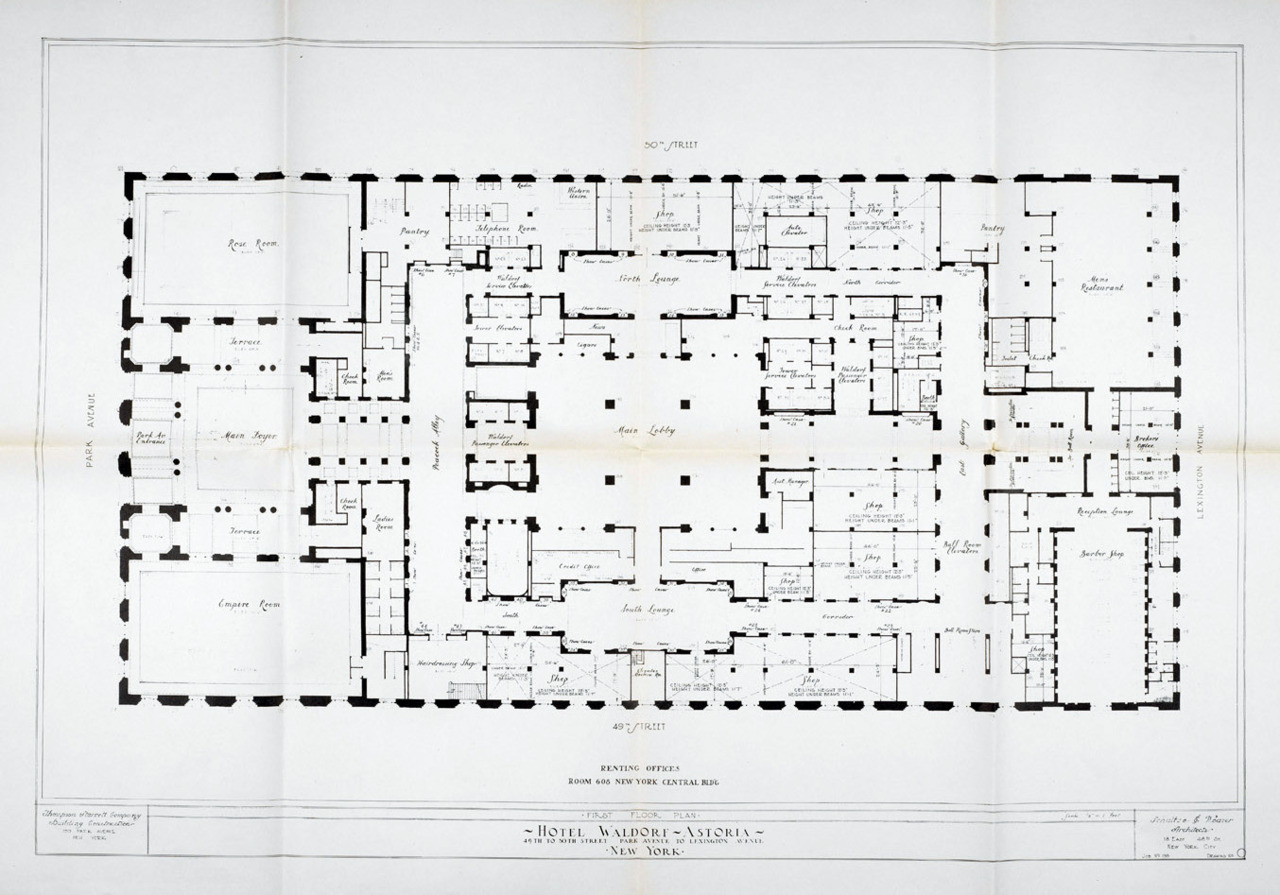
Template:S-start Template:Succession box Template:Succession box
{{safesubst:#if:|||} }}{{safesubst:#invoke:Check for unknown parameters|check|unknown=Template:Main other|preview=Page using Template:End with unknown parameter "_VALUE_"|ignoreblank=y| html | 1 }}
Template:Waldorf Astoria New York Template:Navboxes Template:Portal bar Template:Authority control
- Waldorf Astoria New York
- 1931 establishments in New York City
- 1930s architecture in the United States
- Art Deco architecture in Manhattan
- Art Deco skyscrapers
- Art Deco hotels
- Astor family
- Waldorf Astoria Hotels & Resorts
- Hotel buildings completed in 1931
- Midtown Manhattan
- New York City Designated Landmarks in Manhattan
- New York City interior landmarks
- Park Avenue
- Presidential homes in the United States
- Railway hotels in the United States
- Skyscraper hotels in Manhattan
- Upper class culture in New York City
- Luxury hotels
- Five star hotels
- Hospitality companies of China