1982 Atlantic hurricane season
Template:Short description Template:Use mdy dates Template:Good article Template:Infobox tropical cyclone season The 1982 Atlantic hurricane season was a well-below average Atlantic hurricane season with five named tropical storms and one subtropical storm. Two storms became hurricanes, one of which reached major hurricane status. The season officially began on June 1, 1982, and lasted until November 30, 1982. These dates conventionally delimit the period of each year when most tropical cyclones form in the Atlantic basin. Activity started early with Hurricane Alberto forming on the first day of the season. Alberto threatened the Southwestern Florida coast as a tropical storm, meadering offshore in the southeastern Gulf of Mexico and causing 23 fatalities in Cuba. The next system, a subtropical storm, formed later in June and affected the same area as Alberto, causing $10 million in damage.
Tropical Storm Beryl formed on August 28, after a quiet July in the open Atlantic Ocean. Beryl grazed Cape Verde, killing 3 people. Tropical Depression Three formed just behind Beryl, tracking east and north of the Caribbean sea in early September. Soon after the dissipation of Beryl, Tropical Storm Chris formed in the Gulf of Mexico on September 9. Chris stayed a weak storm, making landfall near Sabine Pass, Texas, and dissipating over land on September 13. Hurricane Debby was the next storm and the strongest of the season. The formative stage of Debby produced rainfall in Puerto Rico, causing one death on the island, and soon strengthened into a Category 4 major hurricane. Debby passed by Newfoundland on September 18 and merged with a non-tropical low on September 20. In mid-September, Tropical Depression Six formed west of Africa, and tracked west-northwest, dissipating before reaching the Leeward Islands on September 20. Its remnant thunderstorm activity continued moving west-northwest, forming Tropical Depression Seven which moved near Bermuda on September 25 before dissipating offshore Nova Scotia. The final storm of the season, Tropical Storm Ernesto, was the shortest-lasting system and stayed out to sea, dissipating on October 3.
Season summary
{{safesubst:#invoke:Check for unknown parameters|check|unknown=|preview=Page using Template:Center with unknown parameter "_VALUE_"|ignoreblank=y| 1 | style }}
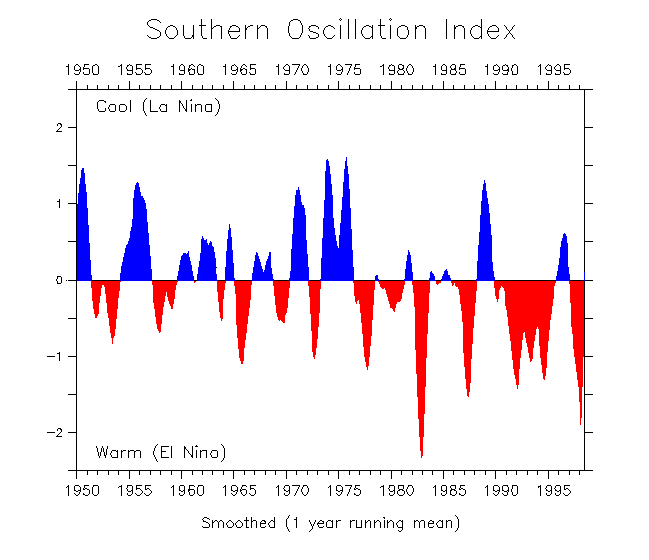
The 1982 Atlantic hurricane season officially began on June 1 and ended on November 30.<ref>Template:Cite news Template:Free access</ref> The season was very inactive because of strong vertical wind shear due to stronger than normal westerly winds aloft.<ref name="mwr">Template:Cite journal</ref> The wind shear was contributed by a variety of factors including a very strong El Niño. Vertical wind shear was strong enough to disrupt convection in areas of disturbed weather so they could not develop further. The El Niño which affected this hurricane season extended into the 1983 Atlantic hurricane season.<ref>William S. Kessler (1999). Southern Oscillation Index. University of Washington. Retrieved on May 23, 2008.</ref> Higher than average values of African mineral dust during the most active portion of the hurricane season could have also suppressed tropical cyclone activity.<ref>Template:Cite journal</ref>
The season's activity was reflected with a cumulative accumulated cyclone energy (ACE) rating of 32,<ref>{{#invoke:citation/CS1|citation |CitationClass=web }}</ref> which is classified as "below normal".<ref name="background">{{#invoke:citation/CS1|citation |CitationClass=web }}</ref> ACE is, broadly speaking, a measure of the power of the hurricane multiplied by the length of time it existed, so storms that last a long time, as well as particularly strong hurricanes, have high ACEs. ACE is only calculated for full advisories on tropical systems at or exceeding Template:Convert or tropical storm strength. Although officially, subtropical cyclones are excluded from the total,<ref>{{#invoke:citation/CS1|citation |CitationClass=web }}</ref> the figure above includes periods when fully tropical storms were in a subtropical phase.
Systems
Hurricane Alberto
Template:Infobox tropical cyclone small {{#invoke:Labelled list hatnote|labelledList|Main article|Main articles|Main page|Main pages}} A surface low-pressure area developed an organized cloud system, leading to the formation of a tropical depression off the northeastern Yucatán Peninsula on June 2. It moved slowly northeastward through the Gulf of Mexico, and strengthened into Tropical Storm Alberto on the next day. Alberto traveled generally northeast on an erratic course, and briefly intensified to a Category 1 hurricane,<ref name="atcr1">Template:Cite report</ref> one of the earliest hurricanes of June, and the earliest date for a hurricane in the Atlantic Ocean since Hurricane Alma in May 1970.<ref>Template:Cite news</ref> Due to strengthening vertical wind shear, Alberto then quickly weakened into a tropical storm, doubled back to the west, and dissipated near the Florida Keys on June 6.<ref name="atcr1"/> Alberto is an example of a storm to enter the Gulf of Mexico and dissipating while never making landfall,Template:Atlantic hurricane best track which is an unusual event.<ref>Template:Cite journal</ref>
Though Alberto never made landfall, the storm dropped more than Template:Convert of rain over western Cuba.<ref name="atcr2">Template:Cite report</ref> This led to severe flooding, considered the worst in that part of the country since 1950.<ref>Template:Cite news</ref> Over 50,000 people were forced to evacuated and approximately 9,000 homes in Pinar del Río Province alone suffered damaged.<ref>Template:Cite news</ref><ref>Template:Cite news Template:Free access</ref> Severe crop and agricultural losses also occurred, particularly to bananas and tobacco.<ref name="atcr2"/><ref>Template:Cite news</ref> Overall, Alberto caused 23 deaths and an estimated $85 million in damage in Cuba.<ref name="em-dat">{{#invoke:citation/CS1|citation |CitationClass=web }}</ref> Southern Florida experienced moderate rainfall, with a peak of Template:Convert occurring in Tavernier.<ref>Template:Cite report</ref> The storm also spawned a few tornadoes and a waterspout in the Florida Keys, collectively causing approximately $275,000 in damage.<ref name="ncdc1">Template:Cite report</ref><ref name="ncdc2">Template:Cite report</ref>
Subtropical Storm One
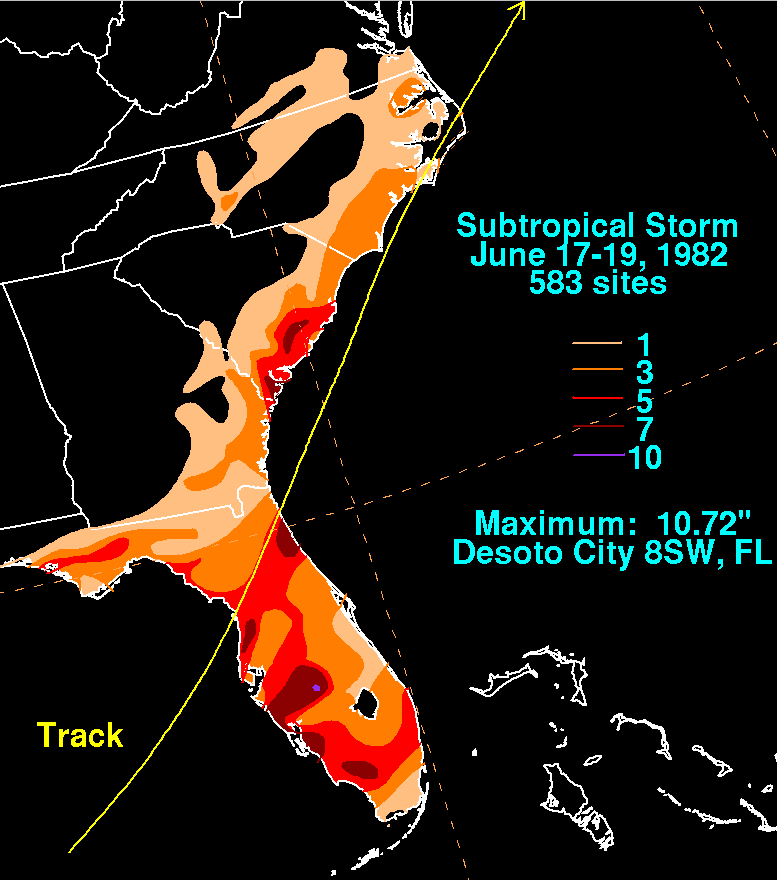
Template:Infobox tropical cyclone small {{#invoke:Labelled list hatnote|labelledList|Main article|Main articles|Main page|Main pages}} The first subtropical storm of the season formed in the east-central Gulf of Mexico on June 18, and moved northeast for its entire life cycle. It crossed the Florida peninsula that night, causing the issuance of numerous severe thunderstorm and tornado warnings. The cyclone also dropped heavy rainfall, peaking at Template:Convert Template:Convert southwest of DeSoto County, Florida.<ref>David M. Roth (2009). Rainfall from Subtropical Storm One. Hydrometeorological Prediction Center. Retrieved on May 23, 2009.</ref> The storm continued, crossing the Outer Banks of North Carolina, and retained its strength until June 20 when it became extratropical near Newfoundland. The cyclone caused three deaths in Florida, sank a fishing trawler off the coast of North Carolina, and caused $10 million in damage (1982 USD).<ref>Joseph Pelissier (1983). Subtropical Storm One Report National Hurricane Center. Retrieved on October 21, 2006.</ref> This was the only subtropical or tropical cyclone to impact the Eastern seaboard this season.<ref name="cliqr">David M. Roth (2009). CLIQR tropical cyclone database. Hydrometeorological Prediction Center. Retrieved on October 28, 2008.</ref>
Tropical Storm Beryl
Template:Infobox tropical cyclone small {{#invoke:Labelled list hatnote|labelledList|Main article|Main articles|Main page|Main pages}} A well-developed tropical wave exited Africa on August 27. The next day, it developed into a tropical depression, and shortly thereafter it intensified into Tropical Storm Beryl. On August 29, it passed just south of Cape Verde as it continued intensifying on its west-northwest track. An eye feature appeared in the convection on August 31, suggesting winds of near hurricane status; since the feature was located on the western side of the deep convection and the storm was slightly asymmetric, the intensity was held just below hurricane status.<ref name="PRPG1">{{#invoke:citation/CS1|citation |CitationClass=web }}</ref> Shortly after, strong wind shear caused the storm to deteriorate, leaving the low-level circulation exposed on the western side.<ref name="PRPG1"/> Beryl weakened to a tropical depression the next day due to the lack of convection, and it continued westward without redevelopment. On September 5, a reconnaissance flight into the depression found winds of Template:Convert; this was deemed unrepresentative of the actual intensity as it was recorded in a squall line. The depression became disorganized once more and by September 6, it was no longer identifiable on satellites.<ref name="PRPG2">{{#invoke:citation/CS1|citation |CitationClass=web }}</ref>
Early in its duration, Tropical Storm Beryl produced heavy rainfall and gusty winds on the Cape Verde island of Sal. The storm caused moderate damage across the archipelago, totaling $3 million (1982 USD).<ref name="em-dat"/> The passage of Beryl resulted in three casualties in Brava Island, as well as 122 injuries.<ref>Office of U.S. Foreign Disaster Assistance (1992). Disaster History: Major Disasters Worldwide 1900 – present. Labat-Anderson Incorporated. Retrieved on June 8, 2009.</ref> In the period after the storm's passage, the United States provided humanitarian aid and economic assistance to the country, helping the archipelago to reverse the effects of Beryl.<ref name="geo-iq">{{#invoke:citation/CS1|citation |CitationClass=web }}</ref>
Tropical Depression Three
Template:Infobox tropical cyclone small This system formed east of the Lesser Antilles on September 6 to the southeast of Tropical Storm Beryl in the tropical North Atlantic Ocean. The depression moved northeast of the Leeward Islands during the afternoon of September 7 while experiencing southwest vertical wind shear, and moved into the southwest North Atlantic before dissipating east of the Bahamas on September 9.<ref name="cliqr"/>
Tropical Storm Chris
Template:Infobox tropical cyclone small {{#invoke:Labelled list hatnote|labelledList|Main article|Main articles|Main page|Main pages}} A surface low-pressure area developed on September 8 in the Gulf of Mexico. It drifted westward, and the next day it organized into a subtropical depression. Under the influence of a trough of low pressure, the depression turned northward, and after steadily becoming better organized it transitioned into Tropical Storm Chris by late on September 10. The storm attained peak winds of Template:Convert before moving ashore near Sabine Pass in Texas. Chris continued inland until it dissipated over central Arkansas on September 13. Prior to making landfall, as many as 6,500 people evacuated from southern Louisiana, while offshore many oil workers were evacuated inland.<ref name="TCR">{{#invoke:citation/CS1|citation |CitationClass=web }}</ref>
Chris produced moderate rainfall along its path, peaking at Template:Convert in Delhi, Louisiana, with totals of over Template:Convert in Mississippi and Tennessee.<ref name="ChrisRain">{{#invoke:citation/CS1|citation |CitationClass=web }}</ref> The rainfall caused locally severe flooding as far inland as Tennessee and Kentucky, with flooding of some rivers reported.<ref name="Significant Floods">{{#invoke:citation/CS1|citation |CitationClass=web }}</ref> The storm spawned nine tornadoes, of which four were F2 or stronger on the Fujita scale.<ref name="Torndoes">{{#invoke:citation/CS1|citation |CitationClass=web }}</ref> Upon moving ashore, the hurricane produced a Template:Convert storm tide, resulting in severe damage to several boats in the Gulf of Mexico. Throughout its path, damage totaled $2 million (1982 USD).<ref name="TCR"/>
Hurricane Debby
Template:Infobox tropical cyclone small {{#invoke:Labelled list hatnote|labelledList|Main article|Main articles|Main page|Main pages}} A tropical wave moved westward offshore the coast of Africa. The wave traveled across the Atlantic, and organized into a tropical depression off the northern coast of the Dominican Republic on September 13. The depression turned north and strengthened into Tropical Storm Debby on September 14 and then a hurricane early the next day. Debby moved north-northeast, pass just east of Bermuda. Debby continued strengthening as it moved north, peaking as a Category 4 hurricane with maximum sustained winds of Template:Convert.<ref name="debby1">Template:Cite report</ref> The storm weakened significantly before passing to the southeast of Newfoundland on September 18, by which time Debby was a Category 2. The storm accelerated and began weakening over the colder waters of the north Atlantic.<ref>Template:Cite report</ref> Debby became extratropical over the far north Atlantic and merged with a strong non-tropical system which was developing over British Isles on September 20.<ref name="laurila">Template:Cite journal</ref>
The precursor disturbance to Debby dropped heavy rainfall across Puerto Rico, peaking at Template:Convert in the southwestern portion of the island.<ref>Template:Cite report</ref> Consequently, some rivers and streams overflowed and landslides occurred, while floodwaters entered some businesses and homes in Guayanilla. One person died after the car he was a passenger accidentally drove into an overflowing stream.<ref>Template:Cite journal</ref> Wind gusts on Bermuda approached Template:Convert, leaving minor damage.<ref name="debby1"/> Debby had little effect on Atlantic Canada, outside of heavy rainfall. Tropical storm-force winds were also recorded at Cape Race.<ref>Template:Cite report</ref> A storm development related to Debby left two dead in Finland.<ref name="laurila"/>
Tropical Depression Six
Template:Infobox tropical cyclone small This tropical depression formed Template:Convert west of the Cape Verde Islands on September 16,<ref>Template:Cite news Template:Free access</ref> and moved west-northwest across the tropical Atlantic Ocean.<ref>Template:Cite news Template:Free access</ref> The system moved within Template:Convert east of the Leeward Islands before dissipating on September 20.<ref>Template:Cite news Template:Free access</ref>
Tropical Depression Seven
Template:Infobox tropical cyclone small The remnant area of disturbed weather from Tropical Depression Six continued moving west-northwest into the southwest north Atlantic. A tropical depression formed from this area Template:Convert west of Bermuda on September 25.<ref>Template:Cite news</ref> The system recurved off the north and northeast, dissipating in north Atlantic shipping lanes southeast of Nova Scotia on September 27.<ref>Template:Cite news Template:Free access</ref><ref>Template:Cite news Template:Free access</ref>
Tropical Storm Ernesto
Template:Infobox tropical cyclone small A tropical wave emerged into the Atlantic from the west coast of Africa on September 23. The west side of the wave expanded and was designated Tropical Depression Eight on September 30. The depression intensified, making a sharp turn on October 1. A reconnaissance flight found Template:Convert winds with a pressure of Template:Convert and the depression was given the name Ernesto. A second reconnaissance flight on October 1 recorded sustained winds of Template:Convert with a pressure of Template:Convert. However, on October 2, Ernesto rapidly weakened and by the next day, the cyclone became unidentifiable after merging with an extratropical low. Ernesto never approached land and caused no reported damage.<ref>Template:Cite report</ref>
Storm names
Template:Tropical cyclone naming The following list of names was used for storms that formed in the North Atlantic in 1982.<ref name="NHOP 82">Template:Cite report</ref> Each name used this season was utilized for the first time, except for the name Debby as it has previously been used on the old naming lists, but spelled as Debbie. No names were retired from this list following the season,<ref>{{#invoke:citation/CS1|citation |CitationClass=web }}</ref> thus it was used again for the 1988 season.<ref name="NHOP 88">Template:Cite report</ref>
Season effects
This is a table of all of the storms that formed in the 1982 Atlantic hurricane season. It includes their name, duration, peak classification, and intensities, areas affected, damage, and death totals. Deaths in parentheses are additional and indirect (an example of an indirect death would be a traffic accident), but were still related to that storm. Damage and deaths include totals while the storm was extratropical, a wave, or a low, and all of the damage figures are in 1982 USD.
|- | Alberto || Template:Sort || bgcolor=#Template:Storm colour|Category 1 hurricane || Template:Sort || Template:Sort || Cuba, Florida || Template:Ntsp || Template:Nts || Template:Atlantic hurricane best track |- | One || Template:Sort || bgcolor=#Template:Storm colour|Template:Sort || Template:Sort || Template:Sort || Southeastern United States, Atlantic Canada || Template:Ntsp || Template:Nts || |- | Beryl || Template:Sort || bgcolor=#Template:Storm colour|Template:Sort || Template:Sort || Template:Sort || Cape Verde Islands || Template:Ntsp || Template:Nts || |- | Three || Template:Sort || bgcolor=#Template:Storm colour|Template:Sort || Template:Sort || Template:Sort || None || Template:Sort || Template:Sort || |- | Chris || Template:Sort || bgcolor=#Template:Storm colour|Template:Sort || Template:Sort || Template:Sort || Southern United States || Template:Ntsp || Template:Sort || |- | Debby || Template:Sort || bgcolor=#Template:Storm colour|Category 4 hurricane || Template:Sort || Template:Sort || Puerto Rico, Hispaniola, Bermuda, Newfoundland || Template:Sort || Template:Sort || |- | Six || Template:Sort || bgcolor=#Template:Storm colour|Template:Sort || Template:Sort || Unknown || None || Template:Sort || Template:Sort || |- | Seven || Template:Sort || bgcolor=#Template:Storm colour|Template:Sort || Template:Sort || Template:Sort || None || Template:Sort || Template:Sort || |- | Ernesto || Template:Sort || bgcolor=#Template:Storm colour|Template:Sort || Template:Sort || Template:Sort || Template:Sort || Template:Sort || Template:Sort || |-
Template:TC Areas affected (Bottom)See also
- 1982 Pacific hurricane season
- 1982 Pacific typhoon season
- 1982 North Indian Ocean cyclone season
- Australian cyclone seasons: 1981–82, 1982–83
- South Pacific cyclone seasons: 1981–82, 1982–83
- South-West Indian Ocean cyclone seasons: 1981–82, 1982–83
- South Atlantic tropical cyclone
- Mediterranean tropical-like cyclone
References
External links
Template:1982 Atlantic hurricane season buttons Template:TC Decades Template:Tropical cyclone season